Moving to Dubai for work is common for UK professionals. The salary is usually better, there's no income tax, and the cost of living — once you've got housing sorted — can be manageable for someone earning well.
What doesn't come with the relocation package: advice on what to do with your savings.
Here's a practical guide to the main questions.
Your UK ISA stops being useful
ISAs are a UK tax wrapper. They're useful in the UK because they shield returns from income tax and capital gains tax. In the UAE, there is no income tax or capital gains tax — so the ISA wrapper provides zero benefit to a UAE resident.
You can keep your existing ISAs open. The money stays there, the provider continues to manage it. But you cannot contribute to a UK ISA while you're a UAE tax resident. HMRC prohibits it.
If you have a Stocks and Shares ISA, the investments continue to run. If you have a Cash ISA earning 4–5% in the UK, it will continue to earn — but your main savings going forward will need a different home.
Your UK bank savings rates still apply — but for how long?
Marcus, Chase, Monzo Savings, Lloyds — these accounts can typically stay open when you move abroad. You're not automatically required to close them.
But banks do review accounts. They may restrict you from opening new savings products with a UAE address. Some UK banks are more aggressive than others about asking for address updates and then restricting non-UK residents.
Practically: your existing UK savings accounts will likely continue to work short-term. But opening new ones from the UAE is difficult, and over time your access may be restricted.
This matters because the most competitive UK cash savings rates (4–5% on easy-access) are often with newer fintechs — and fintech providers like Trading 212 Cash, Chip, and others explicitly restrict UAE residents in their eligibility criteria.
UAE banks are not a straight swap
When you arrive in Dubai, you'll open a UAE bank account. ADCB, Emirates NBD, Mashreq, FAB — all of them have expat-friendly accounts.
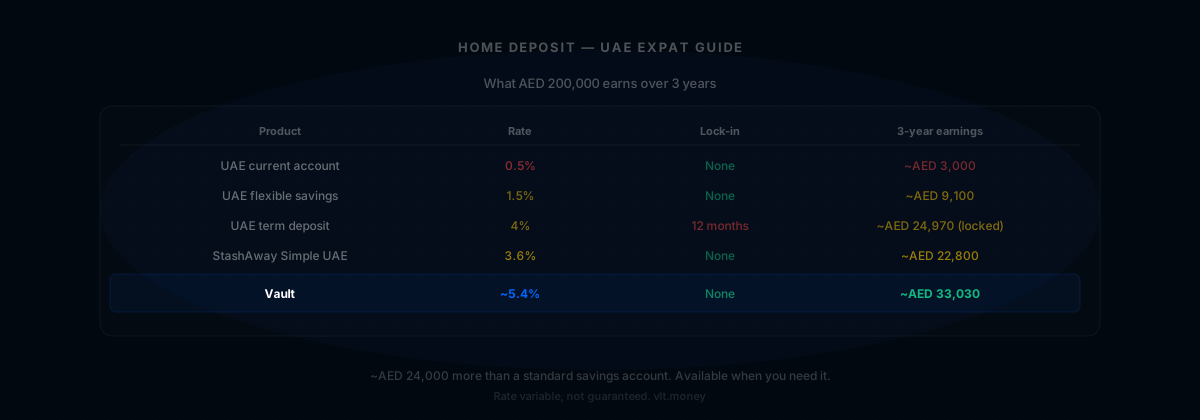
The default savings rate at these banks sits in the 0.5–2.5% range. Most accounts don't automatically put your balance in a savings product — they sit in a current account earning 0%.
There are higher-rate options with conditions:
- Wio Bank: up to 6% if you route your salary there
- Mashreq NEO PLUS: up to 6.25% with AED 10K/month salary routing; also a 5% AED non-salary tier (requires AED 50,000 minimum balance and a maximum of two withdrawals per month — exceed that and you forfeit the month's interest)
If your employer pays in AED and you're willing to salary route, these are worth considering. If you're paid internationally (common for contractors and remote workers), the salary routing condition often isn't practical.
The gap that opens for internationally mobile savers
UK expats in Dubai often end up in the same position: their savings are sitting in a UAE current account at 0–1%, their UK accounts are earning 4–5% but getting progressively harder to manage, and they're trying to figure out the right setup.
The core issue is structural. UAE bank rates are low by default. The high rates require conditions that don't suit expats. The UK products are drifting out of reach.
What's actually available in UAE for no-condition flexible savings
For USD savings with no salary routing requirement, no lock-in, and no AED restriction:
| Option | Rate | Notes |
|---|---|---|
| UAE bank standard | 0.5–2.5% | Variable |
| Wio (no salary) | 3.25% AED | AED only, flexible |
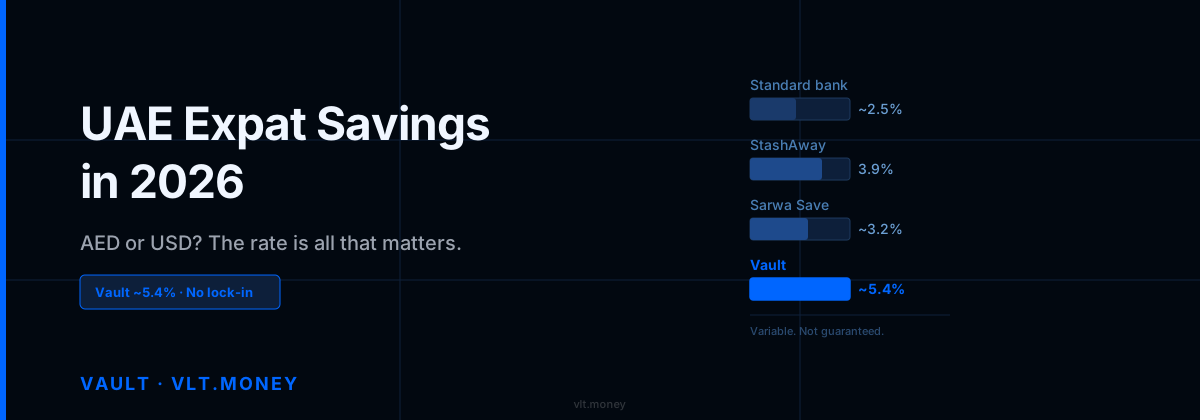
| Sarwa Save+ | ~3.2% net | 0.5% annual fee, money market fund |
| StashAway Simple UAE | 3.6% net | DFSA-regulated |
| Vault | ~5.4% (variable) | No fee, no lock-in, USD |
Vault is designed specifically for this gap: UAE residents who want idle savings to earn without the complexity of investing, the restrictions of fixed deposits, or the conditions attached to high-rate bank accounts.
The practical checklist
When you move to the UAE from the UK:
Keep running:
- Existing UK ISAs (stop contributing, but leave the investments)
- UK current account (for Sterling transactions, pension contributions, direct debits)
- Premium Bonds (if you have them — they continue, you just can't buy new ones easily)
Review:
- UK cash savings accounts — check eligibility terms for non-residents
- UK fintech accounts (Trading 212, Monzo, Chip) — many will restrict UAE residents
Set up in UAE:
- UAE bank account for local salary and expenses
- A UAE-accessible savings product for idle USD savings (Vault is on the waitlist at vlt.money)
Join the waitlist at vlt.money
Vault earnings are fees paid by institutional borrowers in vetted lending markets — not guaranteed returns. Rates are variable. Vault is in the process of obtaining ADGM regulatory approval.