Revolut Is Coming to UAE. Here's What It Can (and Can't) Do for Your Money.
Revolut is one of the best-designed financial apps in the world. It's genuinely useful for payments, FX, international transfers, and budgeting. So when the news broke that Revolut received in-principle approval from the Central Bank of UAE, a lot of people got excited.
That excitement is reasonable. But there's an important detail worth understanding before you assume Revolut will replace your savings account.
What Revolut's UAE Licence Actually Covers
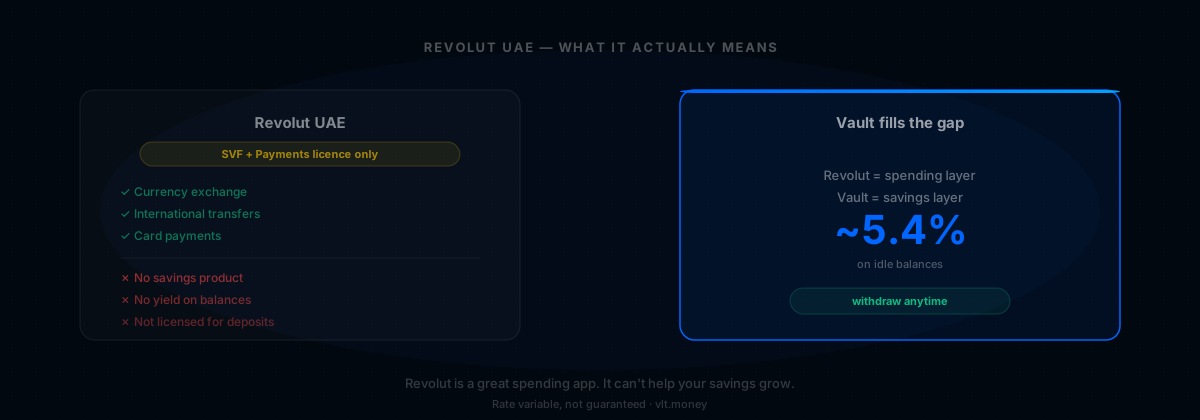
Revolut's UAE approval covers two categories: stored value facility (SVF) and retail payments. In plain English, that means it can hold your money for spending and send it places.
What it doesn't cover: savings accounts, investment products, or earnings on your balance.
This isn't a technicality. It's the core of what a financial licence determines. A payments licence lets you move money. A savings or investment licence lets you grow it.
Revolut UAE, when it launches, will be an excellent tool for spending your money internationally and managing FX. It will not be a way to earn more on the cash sitting idle in your account.
Why This Matters
The average UAE resident has a meaningful amount of idle cash — sitting in current accounts earning nothing, or in savings accounts earning 1–2% at best.
A payments app, however well-designed, doesn't solve that problem. It just makes it easier to move the money around.
The gap that Vault is closing is different: it's the gap between what institutions earn on your capital and what you actually receive. Banks lend your deposits out at 5–8% and pay you 1–2%. Vault routes you into the same type of lending markets directly, so the fees flow to you instead of to the bank's margin.
Revolut doesn't do that. It's not designed to. The licence doesn't permit it.
Useful for Different Things
To be clear: Revolut UAE launching is genuinely good news for UAE consumers. International transfers, multi-currency accounts, and competitive FX rates are all genuinely useful. If you're an expat who regularly moves money between currencies or countries, Revolut will probably be worth having.
But useful for spending and useful for saving are different things. Most people in UAE need both — not one or the other.
A sensible setup might look like this: a payments app like Revolut for day-to-day spending and international transfers, and a savings tool like Vault for the money you want to put to work.
What to Actually Look For in a Savings Product
Since Revolut UAE's launch will likely generate a lot of noise, here's a quick checklist for evaluating any savings product — including ours:
1. What licence do they hold? For savings or investment products, look for a reference to FSRA (Abu Dhabi), DFSA (Dubai), or equivalent. A payments licence doesn't make a savings product credible.
2. Where does the money actually go? "Savings" can mean anything from a bank deposit to a money market fund to a lending market. Ask what the underlying structure is.
3. Is the rate real or promotional? A 6% rate that requires salary routing or locks your money for 12 months is a different product than a flexible rate you can access anytime. Know what you're signing up for.
4. Can you withdraw anytime? Lock-ins reduce liquidity — that's a cost, even if it's not a cash cost. Understand the terms before you commit.
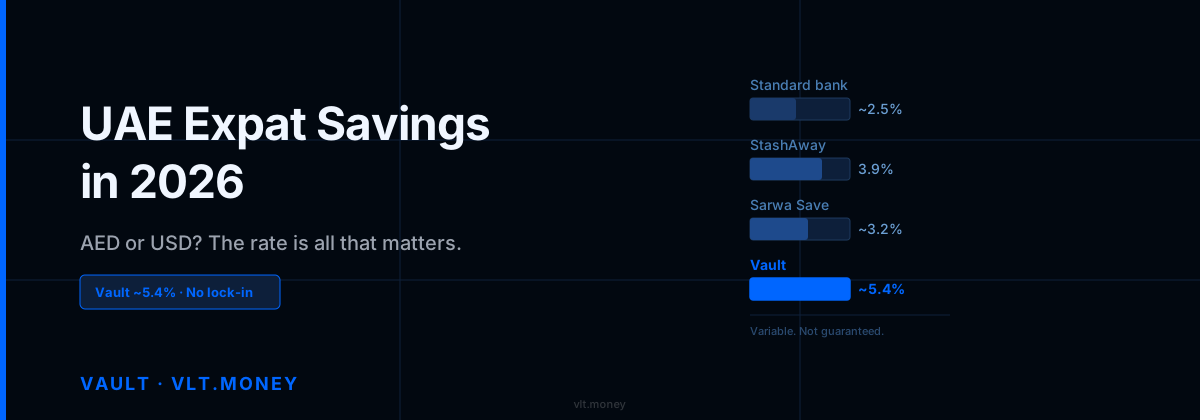
For what it's worth: Vault earns ~5.4% currently. The source is borrowers paying fees to access capital in lending markets. The rate is variable, not promotional. You can withdraw anytime.
We're also pursuing FSRA authorisation under ADGM. Not there yet — but we say that publicly, because we think transparency is the right baseline for a financial product.
Revolut launching in UAE is good news for the market. It just won't solve the savings problem.
Join the waitlist at vlt.money