No income tax, stable currency, global banking access. The UAE is an excellent place to build wealth — but only if you set it up right. The gaps compound quietly.
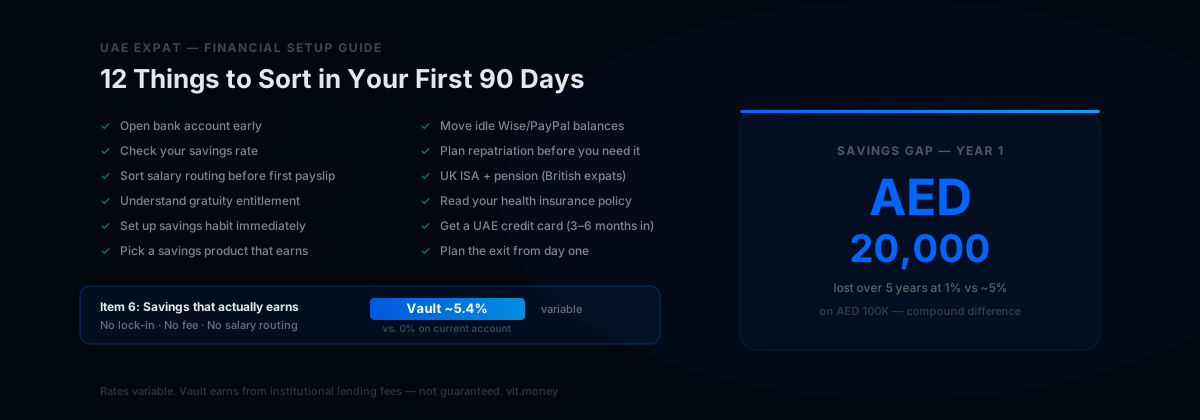
Here's what to actually sort in your first 90 days.
1. Open a UAE bank account before you need it urgently
Bank approval takes 2–4 weeks. You'll need your Emirates ID (5–10 working days after visa stamping), a salary certificate, and proof of address. Start the application as soon as your visa is stamped — not when your first salary is due.
Recommended: FAB, Emirates NBD, or ADCB for established banks. Wio or Mashreq NEO for digital-first.
2. Understand what your bank's savings rate actually is
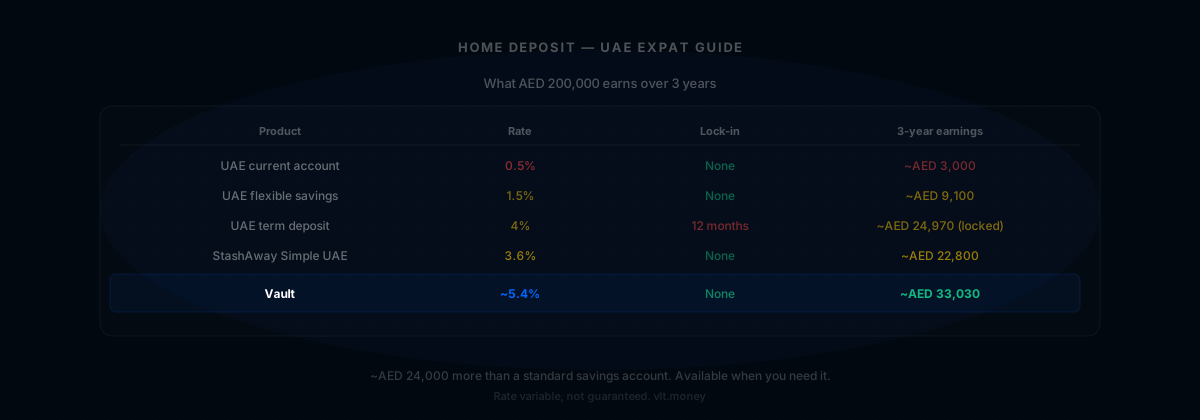
UAE current accounts earn 0%. Standard savings accounts earn 0.5–2.5%. The bank won't tell you unless you ask — most arrivals assume they're earning something and they're not. Fine for transaction money. Not fine for savings.
3. Sort salary routing before your first payslip
Wio (6%) and Mashreq NEO PLUS (6.25%) require salary routing — your employer deposits directly to that bank. Once payroll is set up, switching takes an HR form and a month. Decide before your first payment. Note: both are AED-denominated and have minimum salary requirements.
4. Understand your gratuity entitlement from day one
UAE end-of-service gratuity (EOSB) is a legal entitlement: 21 days of basic salary per year for your first 5 years, then 30 days/year after that. It's calculated on basic salary — not total package. If your employer has structured compensation with a large allowance and small basic, your gratuity is lower.
Gratuity of AED 100,000–300,000 is common after 5–8 years. It should be put somewhere that earns, not left in a current account.
5. Set up a savings habit immediately
The UAE's tax-free salary is only an advantage if you capture it. Many expats earn more than they did at home but save the same amount — lifestyle inflates to match. Automate a transfer to savings on payday. Treat it as a fixed outgoing. Adjust the lifestyle around what remains.
6. Pick a savings product that actually earns
No lock-in, no salary routing required, rate beats inflation — that's the filter. Current no-condition options:
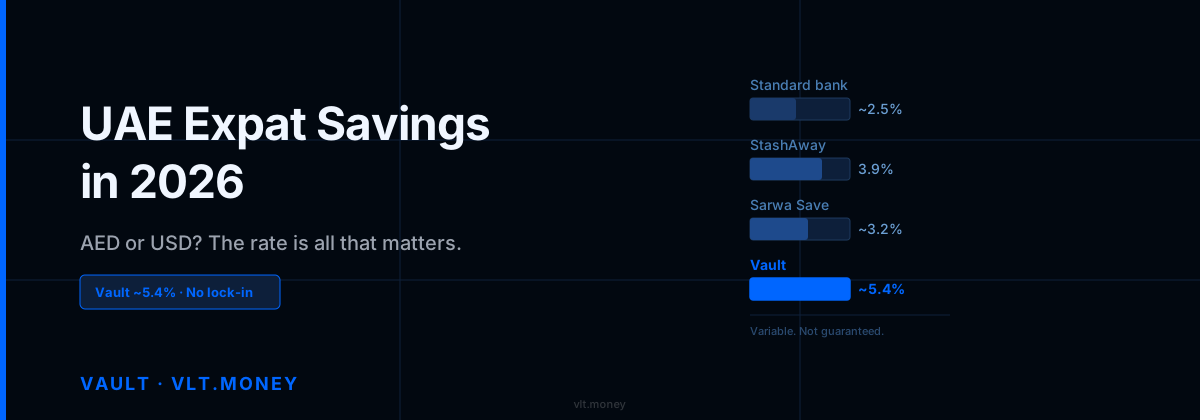
- UAE banks (standard): 0.5–2.5%
- Wio (no salary routing): 3.25% AED
- StashAway Simple UAE: 3.6%
- Sarwa Save+: ~3.2% net (3.7% gross, 0.5% fee)
- Vault: ~5.4% variable, no fee (waitlist at vlt.money)
UAE inflation is approximately 2.2–2.8%. Any savings rate below that is a real-terms loss.
7. Don't leave money idle in Wise or PayPal
Wise earns 0% in the UAE — a licensing constraint, not a product choice. The opportunity cost of $20,000 sitting in Wise vs. a 5% savings account is roughly $1,000/year. Move idle balances to a product that earns.
8. Understand how to repatriate when you leave
The UAE has no capital controls — you can move money out freely. Plan this before you need it: know the destination account, what notice your UAE bank needs for large transfers, and what AML documentation the receiving bank will ask for. Large outbound transfers from accounts with short local history sometimes get flagged.
9. Check your UK ISA and pension situation (British expats)
You cannot contribute to a UK ISA as a UAE tax resident — your existing ISA stays open, just stop adding to it. Workplace pensions can continue depending on employer rules; SIPP contributions are subject to UK earnings limits. If you have a DB pension, contact the scheme. Don't leave a dormant UK pension unmanaged for years.
10. Sort health insurance properly
Health insurance is mandatory in the UAE. Your employer provides it — but coverage varies enormously. Read the policy. Know your excess, which hospitals are on-network, and whether pre-existing conditions are covered. Most expats don't check until they need to use it.
11. Get a UAE credit card after 3–6 months
A UAE credit card builds local credit history and earns rewards (air miles, cashback). Apply once you have 3–6 months of account history. Consumer debt in the UAE runs 24–36% APR — only use it for spending you'd make anyway.
12. Plan for the exit from day one
The decisions you make in Year 1 set your exit position:
- Gratuity accrual is service-length dependent — 4 years vs. 5 is a meaningful difference
- UAE property takes 60–90 days to sell; only buy if you can hold 3+ years
- Flexible savings stay accessible on exit day; fixed deposits may have early-exit costs
Plan it from the start.
Vault is a UAE-accessible savings product currently in waitlist phase. Earnings come from fees paid by institutional borrowers in vetted lending markets — variable, not guaranteed. Vault is pursuing ADGM regulatory approval. Join the waitlist at vlt.money.