Most UAE expats get paid in AED. They save in AED. They never think much about it.
Until they're planning to leave — or sending money home — and realise every dirham they saved may have silently gained or lost value against the currency they actually need.
Here's how to think about it.
The dirham peg
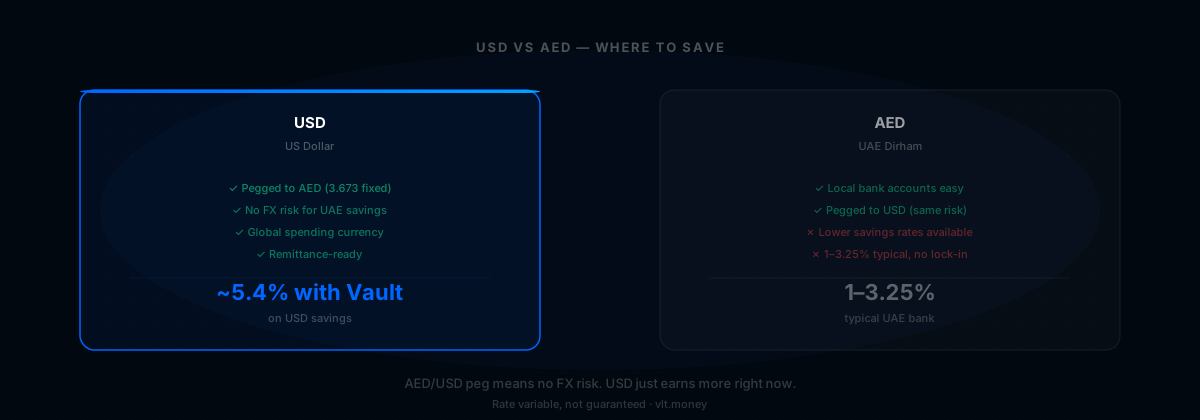
The AED has been pegged to the US dollar since 1997. One dollar buys 3.67 dirhams. It doesn't move.
This means if you save in AED, you are effectively saving in USD. The currency risk between AED and USD is zero. For most expats whose "home" currency is something else — sterling, euros, Indian rupees, Philippine pesos — the relevant question is actually AED/USD versus your home currency.
When the peg works in your favour
If you're a US citizen or earn income in USD, the AED peg is your friend. Savings in AED are savings in USD. No conversion loss, no exchange rate anxiety. You're just picking the best savings rate available in AED terms.
When the peg creates a hidden risk
If your eventual destination is the UK, Europe, India, or anywhere else, your AED savings are still denominated in a USD-equivalent. That can work against you.
Example: if the British pound strengthens 10% against the dollar over two years, your AED pot buys 10% less sterling when you leave. Your savings rate may have given you 5.4% cumulative — but a 10% currency move wiped out the gain and then some.
This is not an argument against saving in AED. It is an argument for being aware of what your savings are actually worth in the currency you will eventually spend them.
Two practical strategies
Strategy 1: Save in USD-equivalent, hedge currency separately
For most expats, keeping liquid savings in AED (pegged to USD) at a competitive rate is sensible. You capture a good return on your idle cash. When it's time to leave, you convert at whatever rate applies.
The key: do not leave savings idle at 0–1% just because you fear the conversion. A 5.4% return on savings that you later convert at a slight loss often still beats sitting in a zero-rate account.
Strategy 2: Keep two buckets
If you have regular financial obligations in a non-USD currency — family support in India, a mortgage in the UK — consider keeping a working fund in that currency and a growth fund in your UAE savings vehicle.
Your UAE savings account covers local emergencies and medium-term goals. A separate holding in your home currency covers ongoing obligations. This avoids the painful experience of converting at a bad time because you had no other option.
What to look for in a UAE savings account
Whichever currency strategy you choose, the savings account mechanics matter:
- No lock-in. Currency markets move. You want to be able to act without waiting for a term to expire.
- No minimum balance. Flexibility to move funds when the rate is right.
- Competitive rate. The larger the cushion of return, the more resilience against currency fluctuation.
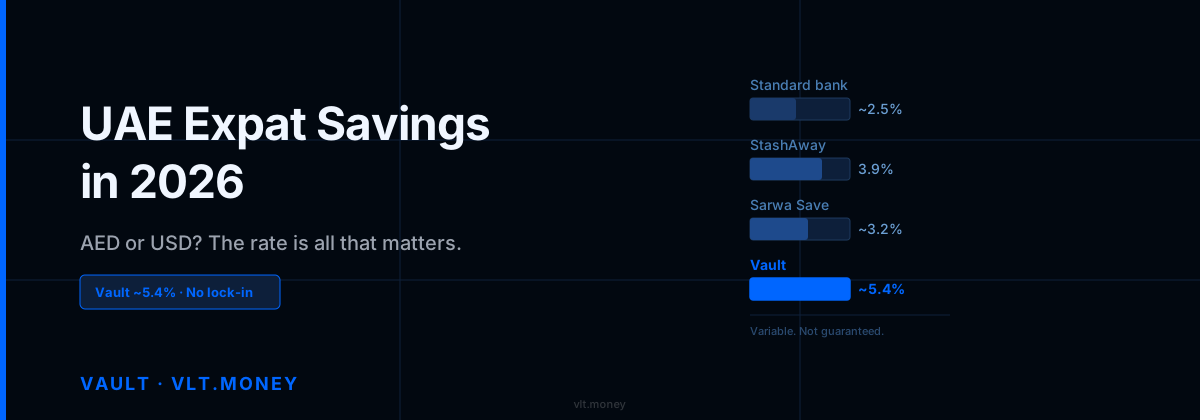
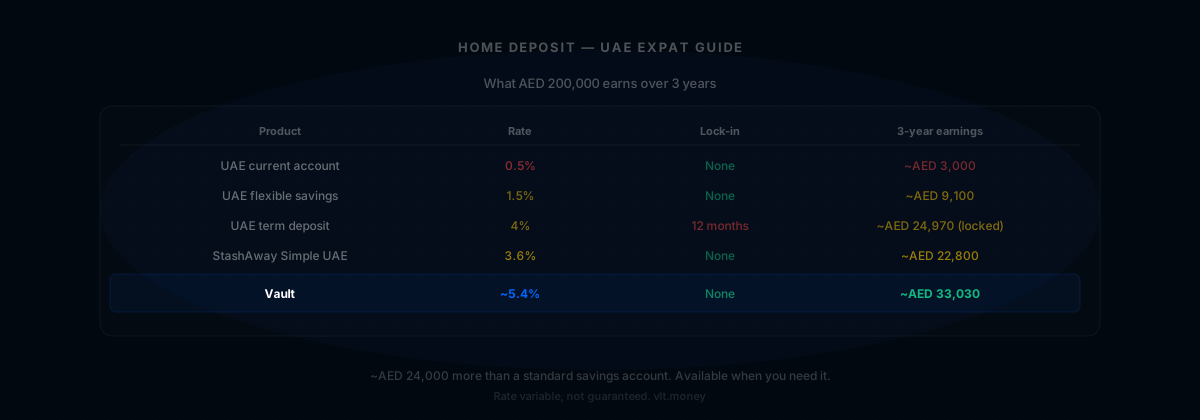
Vault earns ~5.4% current from fees generated by vetted institutional lending markets. No lock-in. Withdraw anytime. That buffer matters when you're weighing up a conversion decision.
The honest bottom line
For most UAE expats, saving in AED makes practical sense. The peg eliminates USD/AED noise. The question is whether you're earning enough on those savings to offset eventual home-currency conversion.
At 0–1% on a standard bank savings account, you almost certainly are not.
At ~5.4%, you have meaningful headroom.
If you're leaving money idle in an AED current account, you're not saving in the wrong currency — you're just not saving smart.
Join the waitlist at vlt.money
Vault earnings are fees paid by institutional borrowers — not guaranteed returns. Rates are variable. Vault is in the process of obtaining ADGM regulatory approval.