For years, the advice was simple: if you want to earn more in the UAE, lock your money in a fixed deposit.
The rates were higher. The trade-off — your money is frozen for 3, 6, or 12 months — felt worth it. But 2026 looks different.
What's happened to term deposit rates
The UAE Central Bank cut its base rate three times in 2025, ending the year at 3.65%. Fixed deposit rates followed.
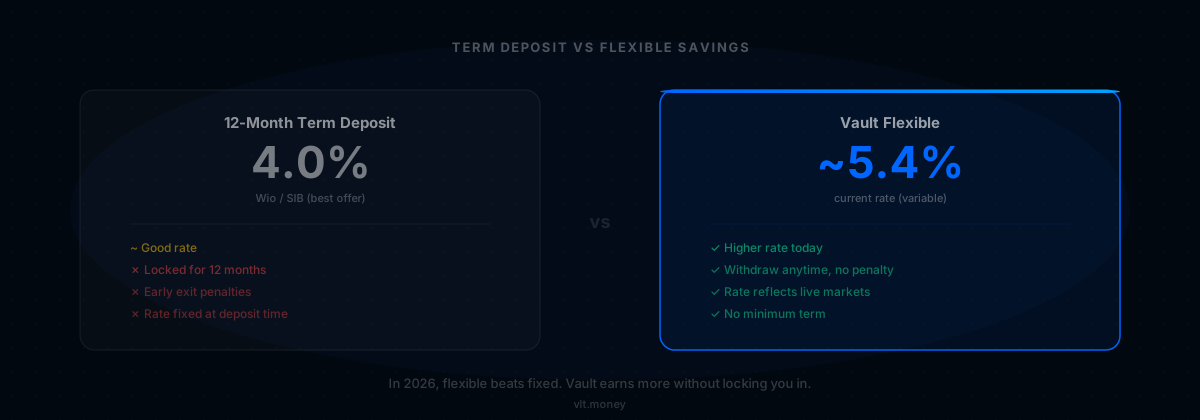
Today, a 12-month term deposit at a major UAE bank pays 2.0–3.7%. The top rates — around 4.0–4.25% — are only available at smaller digital banks, and they still require full lock-in. Miss the window, need the money early, or the bank changes terms? You may lose the rate entirely, or face penalties.
The promotional rates that made FDs attractive in 2023 and 2024 are largely gone. FAB's iSave 4% (new funds only, through June 30, 2026) is one of the few remaining promotional flexible savings rates.
The flexibility gap
Here's what lock-in actually costs:
Your rent goes up unexpectedly. Your car needs a repair. A family emergency means you need to send money home fast. With a fixed deposit, you're either locked out of your money or paying to break it early.
For most UAE residents — expats especially — liquidity matters. You may repatriate funds. You may change jobs. Your financial situation can shift quickly in ways that make three-to-twelve-month lock-ups genuinely inconvenient.
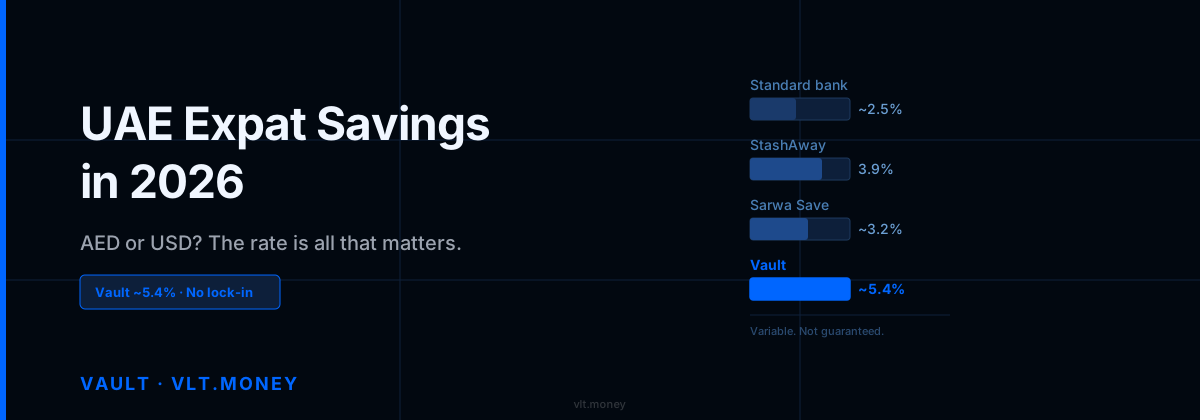
Flexible savings accounts solve this, but traditionally at a cost: UAE bank savings accounts typically pay 0.5–2.5%, with the higher rates requiring salary routing or minimum balance conditions.
What's changed in 2026
A new tier of flexible savings is emerging — products that earn more than a term deposit without requiring lock-in.
Vault earns ~5.4% currently from fees generated by vetted institutional lending markets. The rate is variable and not guaranteed, but it's not a promotional teaser designed to expire. It reflects actual fees from institutional borrowers — not a bank's quarterly deposit acquisition target.
Withdraw anytime. No conditions. No salary routing. No minimum balance.
That means you earn while keeping full control of your money. If something comes up, you leave. If the rate drops below what you need, you leave. There's no exit penalty.
The comparison in practice
| Account type | Rate (approx.) | Lock-in? | Conditions? |
|---|---|---|---|
| UAE major bank FD (12m) | 2.0–3.7% | Yes | Capital locked |
| UAE digital bank FD | 4.0–4.25% | Yes | Capital locked |
| UAE savings account (flexible) | 0.5–2.5% | No | Often conditional |
| Vault (~5.4% current) | Variable | No | None |
The ~5.4% figure is current, variable, and not guaranteed. But it illustrates the shift: flexible and high-earning are no longer mutually exclusive.
The question to ask
Before locking money into a fixed deposit in 2026, ask: what am I giving up?
If the flexible alternative earns a comparable or better rate — without the lock-in — the case for fixed weakens substantially. The value proposition of a term deposit was always the rate premium. That premium is harder to find now.
The better question isn't "FD or savings?" It's "which account pays the most while letting me leave whenever I want?"
Vault earns ~5.4% currently from fees charged to borrowers in vetted lending markets. Rate is variable and not guaranteed. Vault is in the process of obtaining ADGM regulatory approval. Join the waitlist at vlt.money.