If you work for a DIFC-registered employer, your end-of-service benefit is no longer sitting as a liability in your employer's books. Since February 2020, DIFC companies have been required to enrol staff in the Dubai Employee Workplace Savings (DEWS) scheme — a formal, ring-fenced structure that replaces the old end-of-service accrual model.
It is a genuine improvement. But it only covers one part of your financial picture.
What DEWS actually does
The old UAE system was straightforward but fragile: your employer accumulated an obligation to pay you a lump sum when you left. The money wasn't set aside anywhere specific. If the company had a difficult year, the liability was still theoretical until the day you resigned.
DEWS changes that. Under the scheme, your employer makes monthly contributions — roughly 5.83% of your basic salary if you've worked less than five years, rising to 8.33% above five years — into a regulated fund account. The fund is held by a licensed provider (Zurich International Life or National Bonds) and the money is yours to direct into a capital-protected option or a growth-oriented option, depending on your preference.
When you leave your role, the balance pays out as your end-of-service benefit. You can claim it on resignation, not just after reaching a service threshold. The old system technically required a full year before any entitlement. DEWS removes that gate.
Several other UAE free zones have introduced similar structures. Abu Dhabi Global Market launched its own equivalent — the Employee Money Purchase Savings Scheme. The direction of travel across the UAE is clear: mandatory, ring-fenced workplace savings are becoming the standard.
What DEWS doesn't do
DEWS solves for your end-of-service entitlement. It does not touch your monthly savings.
Most UAE employees still receive their salary into a current account, spend what they spend, and leave the rest earning somewhere between 0% and 0.5% per year. That gap — the distance between your DEWS contributions and the cash you hold month-to-month — is where real money goes to waste.
If you keep AED 50,000 in a current account for a year and earn 0.5%, you earn AED 250. UAE inflation running around 2.3% means your real purchasing power fell by roughly AED 900 in the same period. The loss is quiet. It doesn't show up anywhere as a number. But it's real.
When DEWS changes how you should think about your savings
Here's the specific shift DEWS creates:
Your end-of-service benefit is now being built up systematically, in a managed structure, regardless of what your employer does with its own cash. That's a stability improvement.
But it also means the gratuity lump sum you might have been mentally earmarking as your "in case I need to leave" cushion is now accumulating more slowly relative to what you actually hold in your current account. The big payout on exit is still coming — but your day-to-day cash position is more exposed.
The practical question becomes: what do you do with the money you're accumulating that isn't going into DEWS?
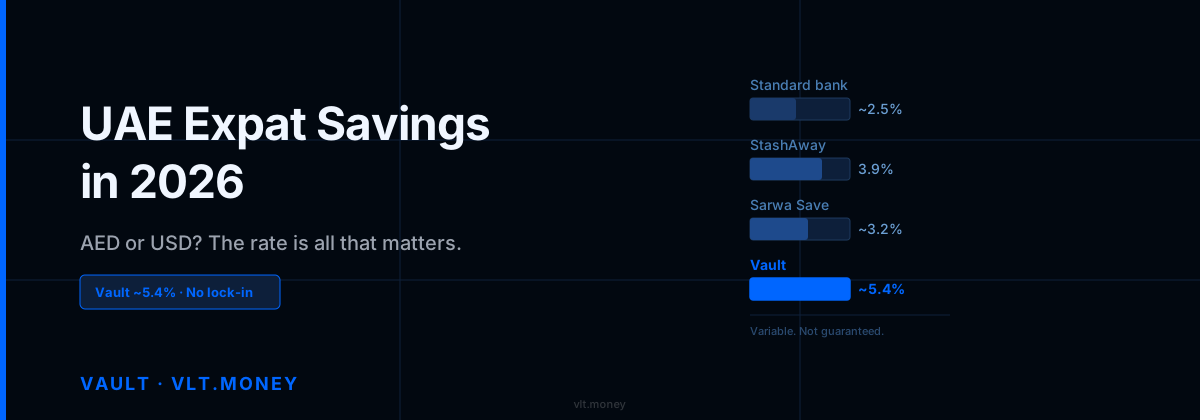
Vault was built for this. Your savings go into vetted institutional lending markets — institutional borrowers pay fees to access capital, and those fees flow directly to your balance. The current rate is approximately 5.4%, variable with market conditions. You can withdraw your full balance within 24 hours. There are no minimum balance requirements, no salary routing conditions, and no lock-up periods.
DEWS is a floor, not a ceiling
UAE workplace savings reform has made a real structural improvement for expats. Your end-of-service benefit is better protected than it was five years ago.
But your monthly savings still sit wherever you put them — and for most UAE current accounts, that's a place that earns almost nothing.
DEWS handles one part of the problem. You still have to handle the other.
For more on UAE end-of-service benefit strategy, see: What to Do with Your UAE End-of-Service Gratuity
Join the Vault waitlist at vlt.money
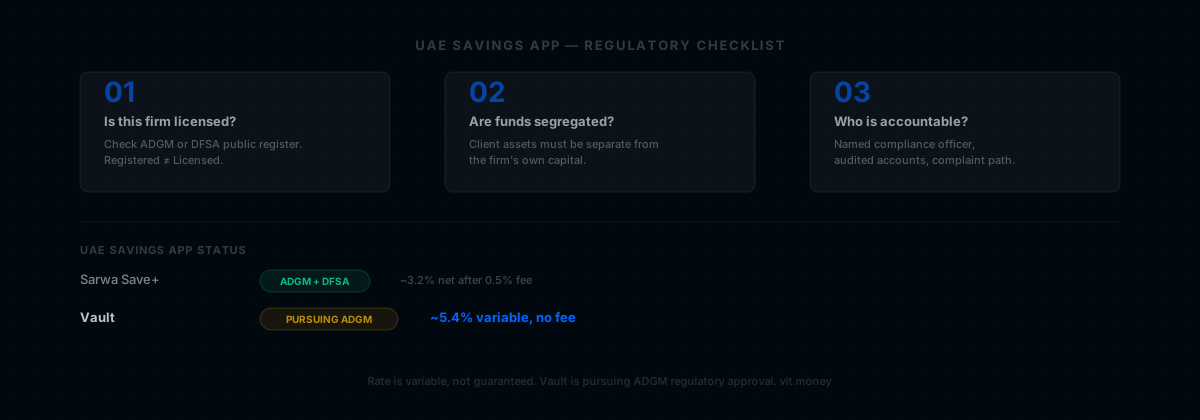
Vault is a product of Prometheus Labs. Earnings are fees paid by institutional borrowers — not guaranteed returns. The rate is variable and moves with market conditions. ~5.4% current. Prometheus Labs is pursuing FSRA authorisation under ADGM and is not yet licensed.