HSBC is one of the most popular banks among UAE expats — the international brand, the Premier account, the ability to manage money across countries. Millions of UAE residents keep savings in HSBC UAE.
The question is: what does the E-Saver actually pay on a normal balance — and is a rate change coming?
HSBC UAE E-Saver: current tiered rates
HSBC's E-Saver is their online savings account with daily accrual, monthly payout, and no monthly fee. Unlike most banks, HSBC publicly discloses the full tiered rate table — and it already shows a lower table effective May 1, 2026.
Current AED rates (from September 1, 2025):
| Balance band | Rate |
|---|---|
| Under AED 100,000 | 0.30% |
| AED 100,000 – AED 500,000 | 0.50% |
| AED 500,000 – AED 1,000,000 | 1.00% |
| AED 1,000,000 – AED 5,000,000 | 1.75% |
| AED 5,000,000 and above | 3.00% |
The rate applies to the entire balance in that tier — not just the incremental portion. And the 3.00% headline only applies at AED 5 million and above.
The May 1, 2026 step-down
HSBC's E-Saver page already shows a lower AED rate table effective May 1, 2026:
| Balance band | Rate from May 1 |
|---|---|
| Under AED 100,000 | 0.20% |
| AED 100,000 – AED 500,000 | 0.30% |
| AED 500,000 – AED 1,000,000 | 0.75% |
| AED 1,000,000 – AED 5,000,000 | 1.50% |
| AED 5,000,000 and above | 2.00% |
The step-down applies across every tier. For the most common retail balance (under AED 100,000), the cut is from 0.30% to 0.20%. For the AED 5M+ tier, it's a 100 basis point drop from 3.00% to 2.00%.
HSBC deserves credit for publishing this openly. Both tables appear on the same product page. You can see exactly where you sit today and what changes on May 1 before you decide anything.
Why UAE banks pay so little on savings
UAE commercial banks earn significant margins on deposits: they take your savings at low rates and lend those funds out at far higher ones. The spread is their business model.
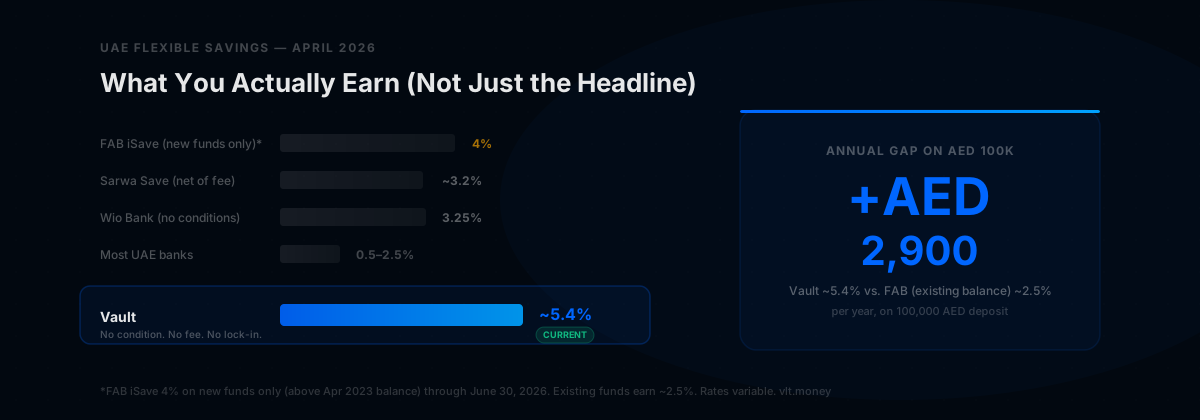
This isn't unique to HSBC. Emirates NBD, ADCB, FAB, and Mashreq all pay broadly similar rates on standard savings accounts. The exception is a handful of promotional or conditional accounts requiring salary routing or minimum balances.
FAB's iSave 4%, for example, runs through June 30, 2026 on new funds only — standard FAB flexible savings earn around 2.5% for most customers.
The real cost of HSBC E-Saver rates
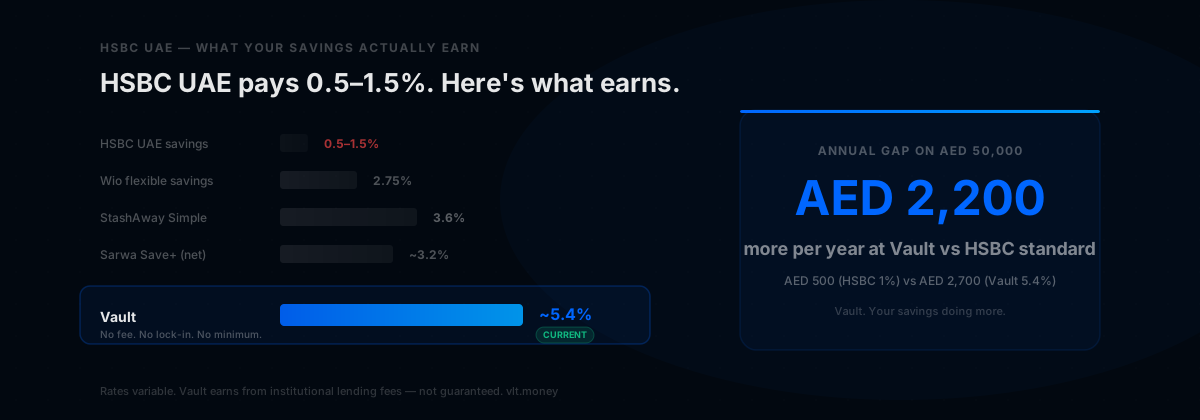
On AED 50,000 (~$13,600) in HSBC's E-Saver:
- At 0.30% (current): AED 150/year
- At 0.20% (from May 1): AED 100/year
- At 5.4% (Vault, variable): AED 2,700/year
- Gap vs Vault today: AED 2,550/year
The E-Saver's headline "up to 3.00%" only applies from AED 5 million. For the vast majority of retail balances under AED 500,000, you're earning 0.30% today and 0.20% from May 1.
Over 5 years at a standard expat balance of AED 50,000 — assuming flat rates — the difference between 0.20% and 5.4% is approximately AED 12,500 in missed earnings.
The HSBC Premier advantage — and its limits
HSBC Premier account holders do get some additional benefits: preferential FX rates, global account access, and slightly higher savings rates. But the rate difference is modest — typically 0.25–0.5% above standard savings.
HSBC Premier is genuinely useful for internationally mobile professionals who move between countries and want continuity of banking. For purely maximising what idle savings earn in the UAE, the rate remains uncompetitive.
What's actually available in the UAE with no lock-in
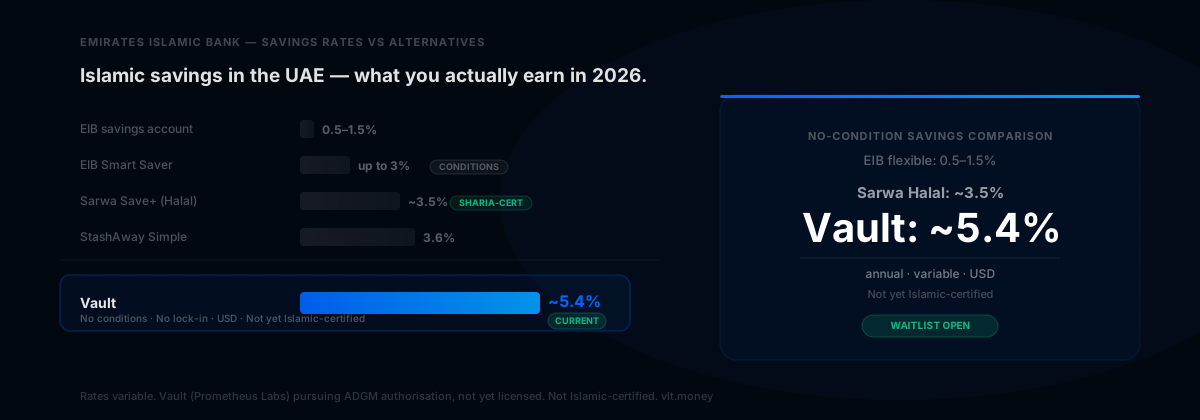
For UAE expats who want competitive earnings without surrendering flexibility, the no-condition, no-lock-in landscape looks like this:
| Option | Rate | Notes |
|---|---|---|
| HSBC E-Saver (AED, retail balance) | 0.30% now → 0.20% from May 1 | No fee, no minimum |
| Wio flexible savings | 2.75% (USD) / 3.25% (AED) | No salary condition |
| StashAway Simple | 3.6% | DFSA-regulated money market fund |
| Sarwa Save+ | ~3.2% net | 0.5% annual fee |
| Vault | ~5.4% (variable) | No fee, no lock-in |
Is Vault a replacement for HSBC?
No. HSBC offers things Vault doesn't: current account access, debit cards, international transfers, global Premier benefits, physical branches across the UAE.
The pattern for many UAE expats: keep HSBC for day-to-day banking and the international functionality — and move the portion of savings that's sitting idle (3–6 months' expenses, gratuity, house deposit, medium-term savings) somewhere that earns meaningfully more.
Vault is built for that portion of savings. It's not a bank account — it's specifically for money you're parking while it works.
What to check before switching any savings
A few things worth verifying before moving savings:
- Regulation: Is the product licensed or pursuing regulatory approval? Vault is in the process of obtaining ADGM regulatory approval.
- Withdrawal terms: Is there a lock-in? Vault has none.
- Fee structure: Does the rate quoted include management fees? Vault charges no annual fee.
- How the rate works: Is it a promotional rate that expires? Vault's earnings come from fees paid by institutional borrowers — not a promotional rate tied to a bank offer.
Join the waitlist at vlt.money
Vault earnings are fees paid by institutional borrowers in vetted lending markets — not guaranteed returns. Rates are variable. Vault is in the process of obtaining ADGM regulatory approval.