For the past two years, UAE residents had genuine choices for flexible savings. Promotional rates above 4%. Money market funds near 5%. Even modest bank accounts improved as global rates rose.
Now the cuts have started. And the differences between products are becoming more visible.
What's happened since the Fed started cutting
The UAE Central Bank closely tracks the US Federal Reserve. When the Fed raised rates sharply in 2022 and 2023, UAE savings products rose with it. When the Fed cut rates three times in 2025 — reducing the total by 75 basis points — most UAE savings products followed downward.
Here's what that decline looks like in practice:
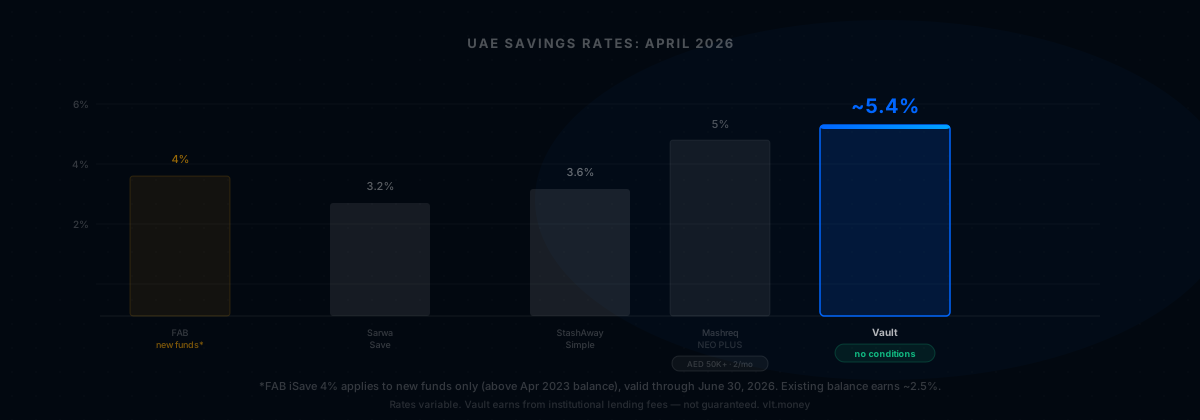
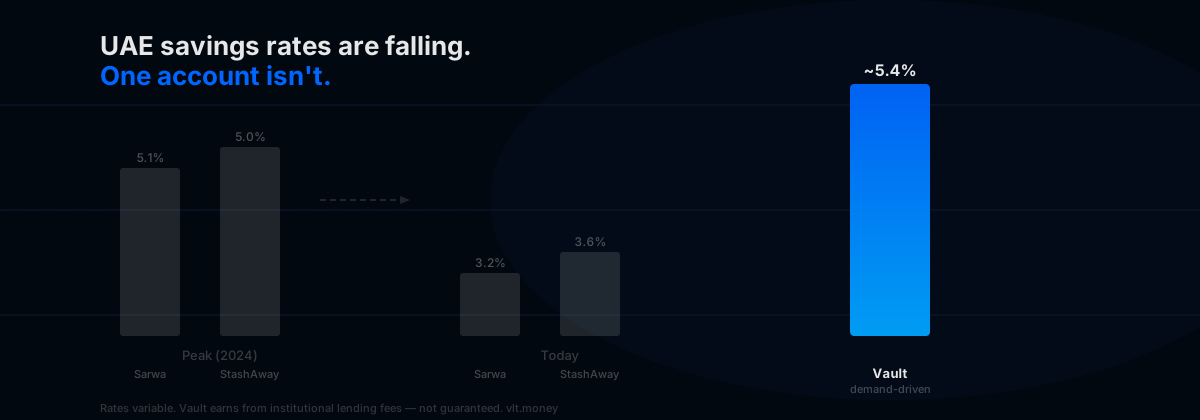
Sarwa Save+ peaked at around 5.1% in mid-2024. Today it pays 3.7% gross — approximately 3.2% net after their 0.5% annual management fee. That's a drop of nearly 200 basis points from peak.
StashAway Simple UAE tracks a similar path. Currently sitting at 3.6%, down from highs near 5%.
UAE bank flexible savings — already the lowest tier — remain in the 0.5–2.5% range, where they've stayed through most rate cycles.
FAB's iSave offers 4% on new funds until June 30, 2026. Standard FAB flexible savings sit at approximately 2.5% for most customers.
These products share a common structure: they hold money in money market instruments or bank accounts that earn based on overnight central bank rates. When central banks cut, these rates fall almost immediately.
Why Vault's rate is different
Vault earns approximately ~5.4% (variable, not guaranteed) from fees paid by institutional borrowers accessing capital in vetted lending markets.
That's a different mechanism entirely. The rate doesn't track what the UAE Central Bank or the US Federal Reserve decides at their next meeting. It tracks what institutional borrowers are willing to pay for access to capital — which is set by demand from institutions, not by central bank policy.
When central banks cut rates, the spread between traditional savings products and Vault tends to widen. Banks pay less. Vault's earnings move to a different beat.
This isn't a guarantee that Vault's rate stays high. Markets shift. Borrower demand changes. The ~5.4% figure is current and variable. But the structural reason that Vault's earnings are decoupled from Fed rate cuts is real — and it shows up in the data.
The comparison right now
| Product | Current rate | Rate mechanism |
|---|---|---|
| Standard UAE bank savings | 0.5–2.5% | Bank margin on deposits |
| Wio (flexible, no lock-in) | 3.25% AED | Fed-linked |
| Sarwa Save+ | ~3.2% net | Money market fund, Fed-linked |
| StashAway Simple UAE | 3.6% | Money market fund, Fed-linked |
| UAE 12-month fixed deposit | 2–4.25% | Fed-linked, capital locked |
| Vault | ~5.4% (variable) | Institutional borrower fees, demand-driven |
The common thread in the middle column: most flexible savings products earn based on what central banks decide.
What happens if the Fed cuts again
Market consensus points to further cuts in 2026. If that happens, money market funds and bank savings products decline further. Vault's rate doesn't get a free pass — if borrower demand drops, earnings drop too. But the mechanism isn't the same, and the sensitivity to central bank decisions is structurally lower.
The ~200 basis point gap between Vault and the next best no-condition flexible option isn't primarily because Vault is doing something clever. It's because the alternatives are tied to a rate cycle moving against them.
The practical implication
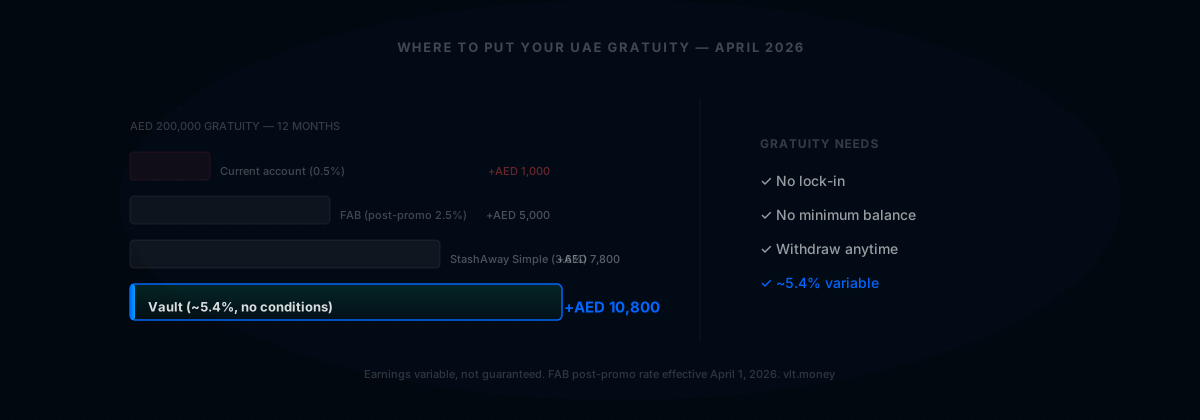
On AED 50,000 (~$13,600):
| Product | Annual earnings (approx.) |
|---|---|
| Standard UAE account (1%) | AED 500 |
| Sarwa Save+ (~3.2% net) | AED 1,600 |
| StashAway Simple (3.6%) | AED 1,800 |
| Vault (~5.4%) | AED 2,700 |
The difference between Sarwa and Vault on that balance is approximately AED 1,100 per year. Between a standard account and Vault: AED 2,200.
That's not hypothetical money. It's the gap between a rate that tracks central bank decisions and one that doesn't.
What to do with this
Check the rate you're currently earning — the 2023 and 2024 headlines don't apply anymore. If you want a rate that isn't mechanically tied to what the UAE Central Bank decides next quarter, Vault is built for that gap. Waitlist at vlt.money. Pursuing ADGM regulatory approval.
Join the waitlist at vlt.money
Vault earnings are fees paid by institutional borrowers in vetted lending markets — variable, not guaranteed. Rates reflect current market conditions and may change. Vault is in the process of obtaining ADGM regulatory approval.