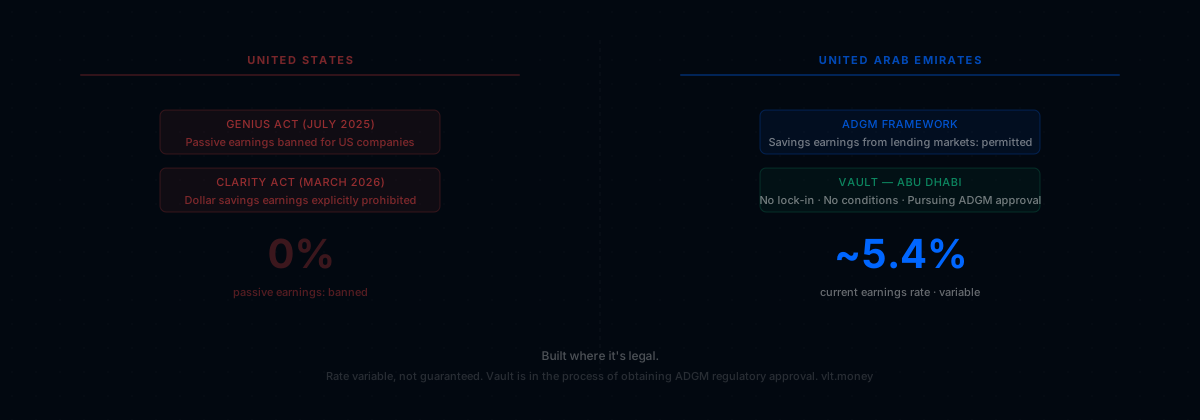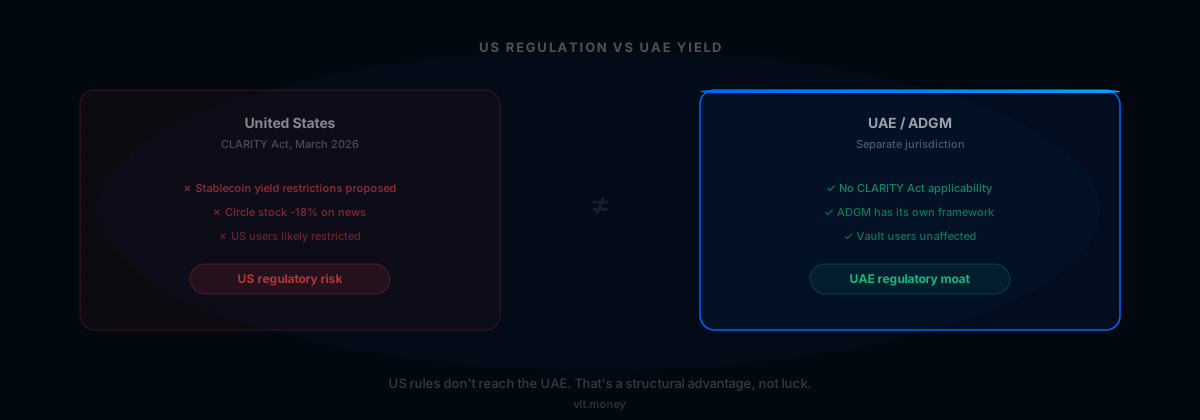
The US Senate reached a bipartisan compromise on the CLARITY Act on March 20, 2026. The White House endorsed the deal. Senate Banking Committee markup is scheduled for late April. Its core provision: passive earnings on digital dollar savings products are banned for US users — anything "economically equivalent to interest" on such balances. Circle saw its stock drop 18% when news first broke.
If you're based in the UAE and earning on your savings through Vault, none of this affects you. Here's why — and why the regulatory geography now matters more than ever.
What the CLARITY Act does
The bill is US domestic legislation targeting digital asset issuers and passive savings products within US jurisdiction. The Senate compromise bans digital asset service providers from offering passive earnings — directly or indirectly — on dollar-pegged digital asset balances held by US residents. Activity-based rewards (tied to payments, transactions, or platform use) remain permitted, but passive savings earnings do not.
This is no longer a draft. It has bipartisan Senate backing and White House support. Senate markup is April — passage is a question of timing, not direction.
Why it doesn't apply to UAE residents
US legislation applies to US persons and US-incorporated entities operating within the US regulatory perimeter. Vault is not a US company. Vault users are UAE residents. Neither the company nor its users fall within the scope of the CLARITY Act.
This is not a loophole or an evasion. It's how international finance works. A UK resident holding a savings account with a Singapore-based bank is not subject to UK deposit insurance rules. A UAE expat using a UAE-incorporated savings product is not subject to US digital asset rules.
What this means for the broader landscape
With the Senate compromise confirmed, American access to passive digital savings earnings is being legislated away. US-based platforms will be restricted. US users will be locked out of a growing category of financial products.
This has a predictable effect: the parts of the world that want USD-denominated savings earnings but aren't subject to US jurisdiction become structurally more valuable. The UAE — USD-pegged currency, large international workforce, active regulatory framework for digital assets — is one of those venues. The window the CLARITY Act closes in the US is one the UAE is opening.
Vault's regulatory approach
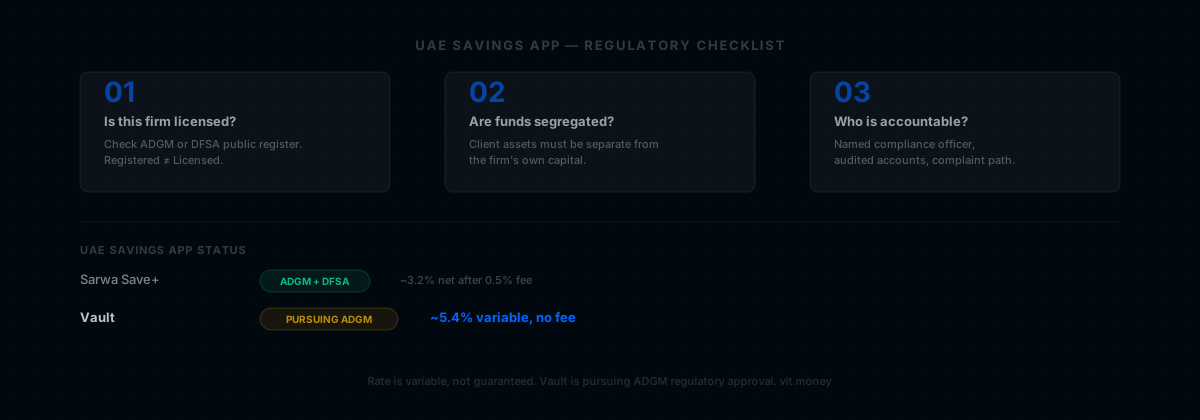
Vault is in the process of obtaining ADGM (Abu Dhabi Global Market) regulatory approval. ADGM is one of the UAE's two major financial free zones, with its own Financial Services Regulatory Authority. It has been actively developing frameworks for digital assets and related financial products since 2018.
An ADGM licence provides a UAE legal basis for operating a savings product — independent of US regulatory decisions. That independence has always been part of the value proposition. Recent US legislative developments make it more legible.
What you're actually earning
Vault routes deposits into a vetted institutional lending market. Borrowers — institutions accessing short-term liquidity — pay fees. Those fees flow back to depositors as earnings. The current rate is approximately 5.4% (variable — it moves with borrower demand, not a fixed promise).
That mechanism doesn't touch US jurisdiction at any point in the chain. The lending infrastructure is non-US. Vault is a non-US entity. Users are non-US residents.
The short version
US digital savings regulation would restrict US users. You're not a US user. Vault isn't a US product. Your earnings are not affected by what happens in Washington.
What does affect your rate: borrower demand in lending markets, and — over the longer term — how ADGM chooses to regulate this category. That's the regulatory risk worth watching if you're using Vault.
Join the waitlist at vlt.money
Vault earnings are fees paid by institutional borrowers — not guaranteed returns. Rates are variable. Vault is in the process of obtaining ADGM regulatory approval.