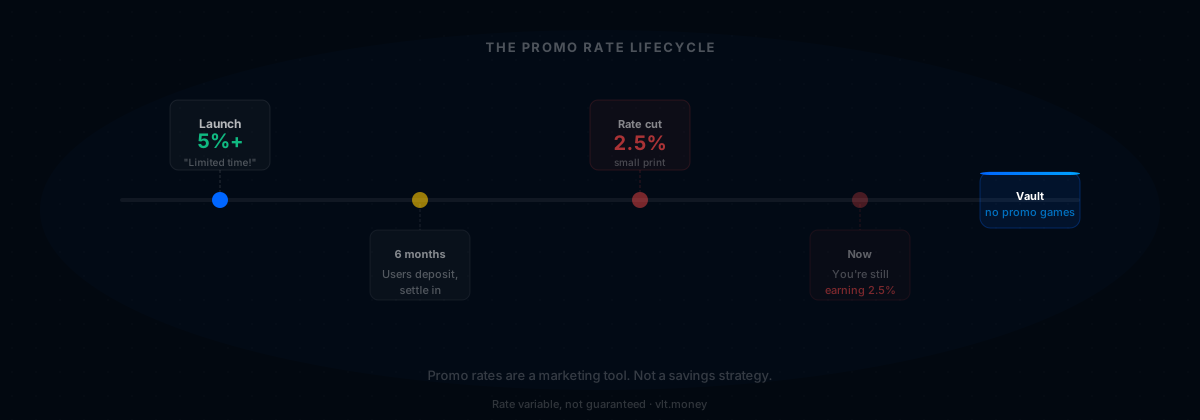
You open an email from your bank. A bold headline: "Earn 4% on your savings." You move your money over. A few months pass. Quietly, without another bold headline, the rate drops back to 1%.
This isn't a bug. It's a feature — for the bank.
How promotional rates actually work
Banks use high introductory rates to attract deposits. The logic is simple: savers are sensitive to rates, so a headline number drives account openings and balance transfers. Once deposits are in, the promotional period ends, the rate reverts to the standard (much lower) offering, and most customers don't notice — or don't bother switching again.
It's the same playbook used by broadband providers, credit cards, and subscription services. A short window of value to get you in, then a long tail of mediocre terms.
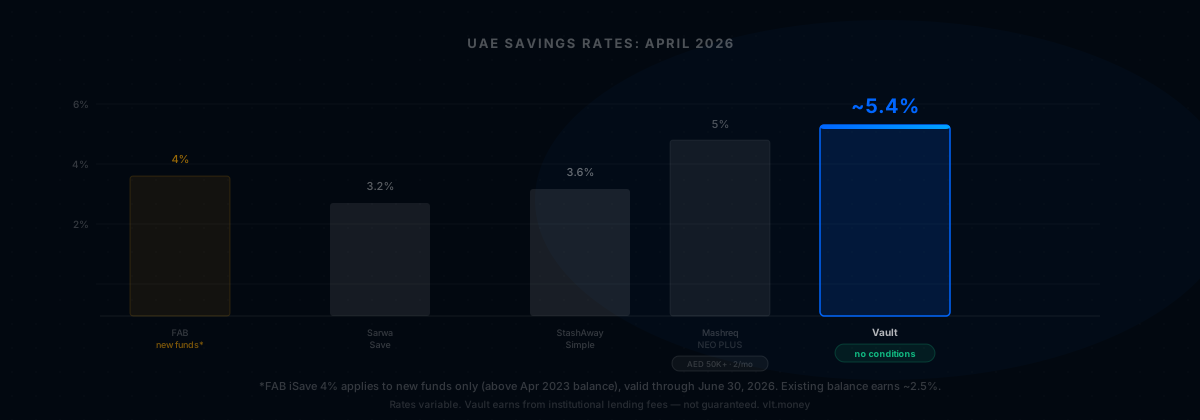
In the UAE, several banks have run high-rate savings promotions over the past year, offering headline rates in the 4–6% range. Many of those promotions have since expired or come with conditions that make the headline rate hard to actually earn.
The cost of chasing promos
For savers who do notice, the obvious response is to keep moving money to wherever the current promo is. But this has costs:
Time and friction. International transfers, account closures, new account applications. Each move takes days or weeks. Your money earns nothing while in transit.
Conditions. Most promotional rates are conditional — primary account status, minimum balance, salary routing, a new deposit requirement. Earning the advertised rate often requires restructuring your entire banking setup.
Tax and compliance drag. For expats, moving money between accounts in different currencies or jurisdictions adds reporting complexity.
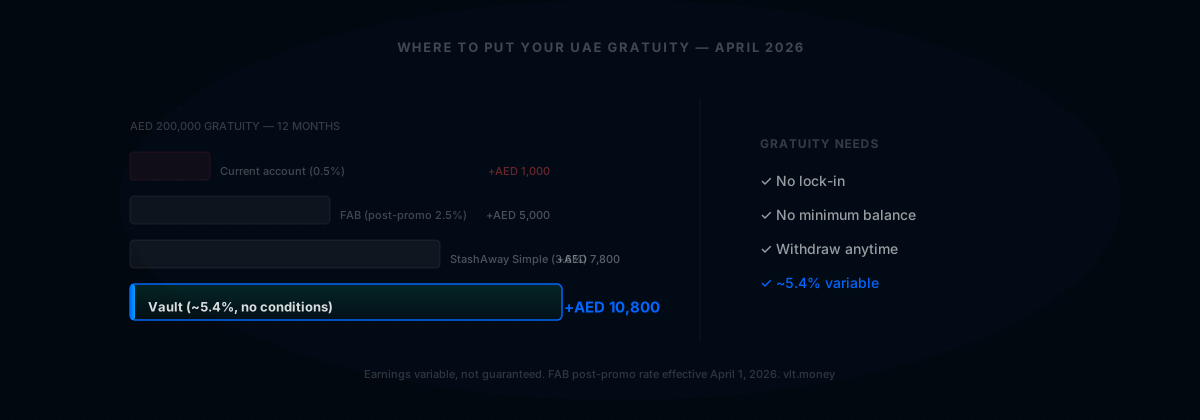
The gap. During the time it takes to move money, find the next promo, and meet its conditions, you're typically earning next to nothing. Run the math over a year and the rate-chasing game often isn't worth it.
What "standard" savings rates look like in the UAE
When you strip away the promotional tiers and salary-routing conditions, most UAE bank savings accounts pay 0.5–1.5% on flexible balances. Digital banks do better — but usually still under 2% for truly unrestricted funds.
The gap between what banks advertise and what most customers actually earn is wide.
A different model
Vault doesn't operate on a promotional period. The earnings aren't a teaser rate designed to expire — they're fees paid by borrowers in vetted lending markets, passed through to savers. Currently around ~5.4% (variable, not guaranteed), reflecting the actual demand from borrowers.
That number will change with market conditions. It might go up; it might go down. What won't happen is a scheduled expiry, a reversion to 0.5%, or a sudden requirement to route your salary through us to keep earning.
There are no promotional periods because there's no promotional logic. The earnings are what the markets pay, minus costs. That's it.
What to ask about any savings product
Before moving your money to a high-rate account, check:
- Is this a promotional rate? If yes, what does it revert to, and when?
- Are there conditions? Primary account, minimum balance, salary deposit, monthly transactions?
- What's the base rate? Not the headline — what do customers without special conditions earn?
- What happens if you miss a condition? Some products pay 0% for the entire month if you miss one transaction.
Most people don't ask these questions. The banks count on that.
Join the waitlist at vlt.money
Vault earnings are fees paid by borrowers in vetted lending markets — not guaranteed returns. Rates are variable and reflect current market conditions. Withdrawals processed within 24 hours. Vault is in the process of obtaining ADGM regulatory approval.