Something shifted in early 2026.
In the last few months, several major platforms launched savings products paying 5% or more. The category that was once called "niche" is now making headlines — and drawing regulatory attention from the US government.
What's happening, and what it means for everyday UAE savers.
The rate landscape has changed
For most of the last decade, if you wanted a savings rate above 2%, your options were: a promotional bank offer with an expiry date, a fixed deposit with a lock-in period, or taking on risk you didn't fully understand.
That's started to change. Institutional lending markets have matured. Technology platforms have reduced the friction. The gap between what banks earn on your deposits and what they pay you is finally being closed — for people who know where to look.
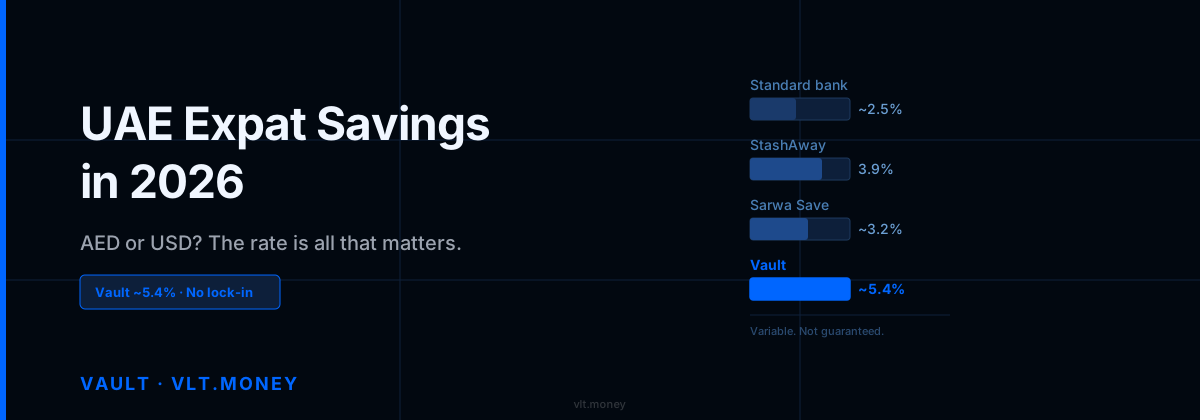
Rates of 5–6% are now available on USD-denominated savings products with no lock-in requirements. This isn't a promo. It's a structural shift in how capital is deployed.
Why most of these products don't work for UAE savers
Here's the problem: most of the new high-rate savings products are built for a different user.
They assume technical knowledge. They require you to interact with interfaces designed for specialist users. They're blocked for users in certain jurisdictions. And they carry regulatory uncertainty in the markets where they operate.
For a UAE expat who wants a better savings rate — but doesn't want to learn what a "vault contract" is — these products aren't actually accessible.
What "accessible" actually means
There are a few things that make a savings product genuinely accessible to someone who isn't a financial professional:
Simple to use. You should be able to deposit money without any specialist knowledge or technical setup.
Your home currency. If you're earning in AED or USD, the product should work in those terms — not require you to convert into unfamiliar assets.
Withdraw when you need to. A high rate that comes with a lock-in period is a constraint, not a feature. Flexibility matters.
Clarity on what's happening to your money. You should be able to read one paragraph and understand: who has your money, what they're doing with it, and what the structural protection is.
Vault's approach
Vault was built with one design principle: the rates that institutions have always accessed should be available to everyday savers, without requiring them to become institutional investors.
When you deposit through Vault, your money goes into a vetted institutional lending market. Borrowers pay fees to access capital. Those fees flow back to you. Current rate: approximately 5.4% (variable — it moves with market conditions, not a promotional calendar).
No specialist knowledge needed. No lock-in. Withdraw anytime.
What the regulatory attention means
The US is moving to regulate high-rate savings products for American residents. That's a signal, not a warning for UAE savers.
It means regulators take this category seriously. It means the products paying 5%+ are real — real enough to attract legislative attention. And it means the jurisdictions that get their regulatory frameworks right will become the natural home for this category.
The UAE, through ADGM and FSRA, is building that framework. Vault is pursuing authorisation within it.
The bottom line
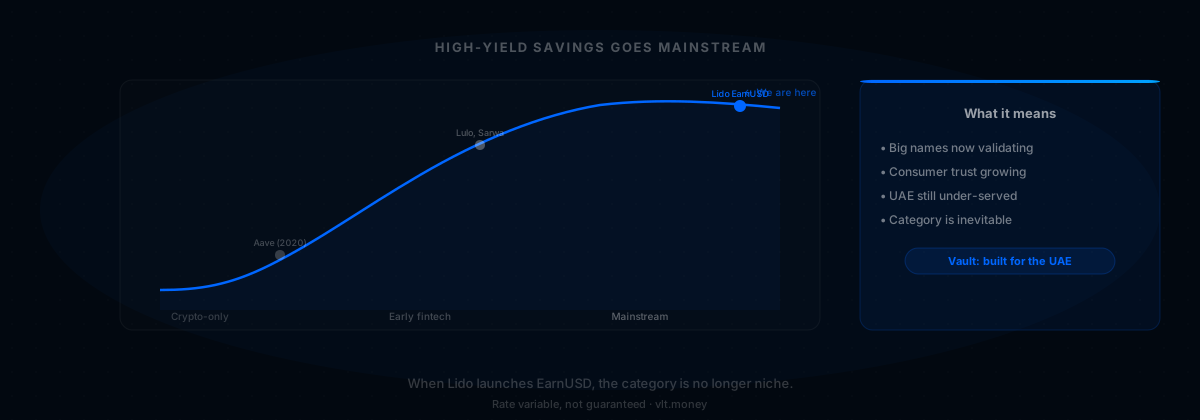
High-rate savings is no longer an edge-case product for sophisticated investors. It's going mainstream.
The next question is: which products will be accessible to everyday savers in the UAE, with the transparency and simplicity to build real trust?
That's what Vault is trying to answer.
Join the waitlist at vlt.money
Vault earnings are fees paid by institutional borrowers — not guaranteed returns. Rates are variable. Vault is in the process of obtaining ADGM regulatory approval.