How Vault Works (Without the Jargon)
Financial products love jargon. It makes simple things sound complex, and complex things sound trustworthy. We're going to do the opposite.
Here's how Vault works, in plain English.
The Basic Idea
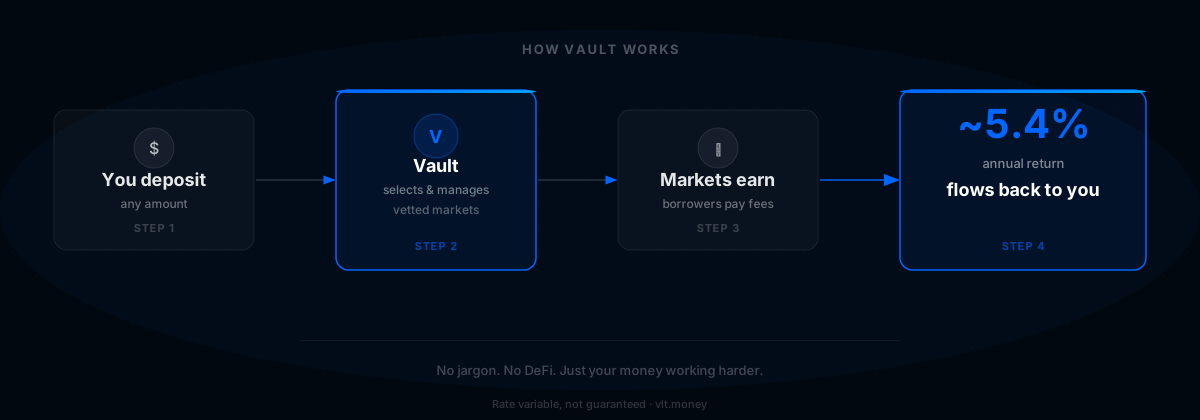
When you deposit money with Vault, we put it to work in vetted lending markets. Borrowers use that capital and pay fees for the access. Those fees flow back to you.
That's it. That's the whole model.
You earn roughly 5.4% annually — not from market speculation, not from locking up your money for years, but from the steady fees generated by short-term lending activity.
Step by Step
1. You connect your bank account and deposit funds.
Your money moves from your bank to Vault. This takes a day or two, just like any bank transfer.
2. Vault deploys your funds into lending markets.
We work with a curated set of lending markets — platforms where borrowers (typically institutions and professional traders) need short-term capital. These aren't random; they're vetted for track record, collateral quality, and risk management practices.
3. Borrowers pay fees to access capital.
Every time a borrower uses the pool you're contributing to, they pay fees. Think of it like a rental fee for money. The more activity, the more fees generated.
4. Fees are distributed back to depositors.
Those fees don't stay with Vault. They flow back to the people who provided the capital — you. The rate you see (~5.4%) reflects the current fee rates across the lending markets we use.
5. You can withdraw anytime.
This isn't a lock-up. You're not committed for a year or more. When you want your money back, you initiate a withdrawal and it returns to your bank account within a normal processing window.
Common Questions
Who's borrowing the money?
Primarily institutional participants — funds and professional traders who need short-term capital to execute their strategies. These aren't individuals taking out personal loans. They're sophisticated counterparties who put up collateral and have strong incentives to repay.
What happens if a borrower can't repay?
The lending markets we work with require over-collateralization, meaning borrowers put up more value than they borrow. If a borrower defaults, their collateral is liquidated to cover the position. This doesn't eliminate risk entirely, but it's a meaningful protection.
Is my money safe?
Vault is non-custodial, which means we don't hold your funds the same way a bank holds deposits. Your position is tracked on your behalf, and you maintain the right to withdraw. We're also transparent about where your funds are deployed at all times.
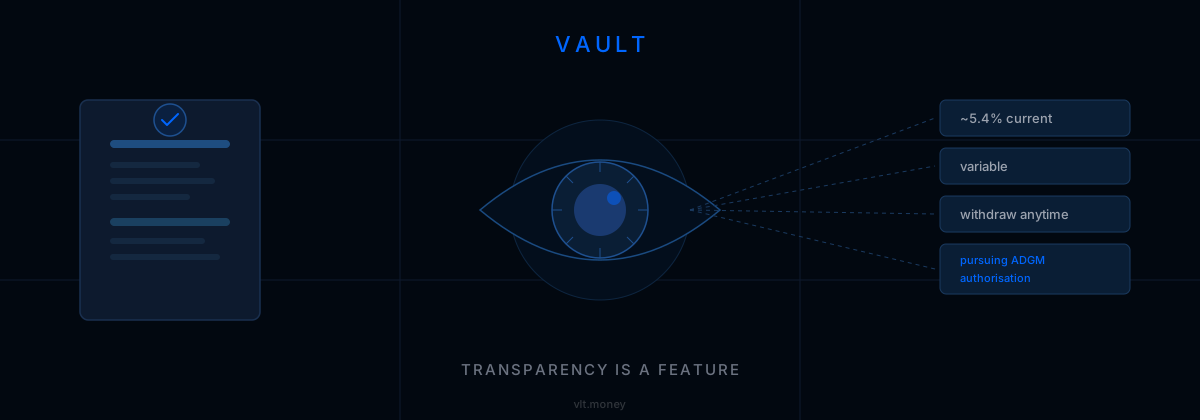
That said, we want to be honest: this isn't an FDIC-insured bank account. There are real risks — market conditions change, and the ~5.4% current rate isn't guaranteed. We show current rates, not promises.
Why ~5.4%? Why not more?
Because the markets we work with are real, and real markets have real rates. We could show you a higher number, but that would be misleading. The rates we display reflect what vetted lending markets are actually paying today.
Is this a complicated financial product?
We don't use technical jargon because we don't think it's helpful. What matters to most people is: can I earn more on my savings, can I access my money when I need it, and is this legitimate? The answer to all three is yes.
The underlying mechanics involve financial infrastructure that's newer than traditional banking — that's what makes the returns different. But the core concept — lending capital to creditworthy borrowers and earning fees — is as old as finance itself.
What We're Not
We're not a bank. We don't offer FDIC insurance. We're not investment advisors, and nothing here is investment advice.
We're a product that makes a previously inaccessible type of earnings accessible to more people. If you're comfortable with how it works and the risks involved, Vault might be a better place for savings you don't need immediate access to.
If you have questions we haven't answered here, reach out. We'd rather you understand what you're signing up for.
Vault earnings are fees paid by institutional borrowers — not guaranteed returns. Rates are variable. Vault is in the process of obtaining ADGM regulatory approval.