Every payments app in the UAE has the same quiet problem.
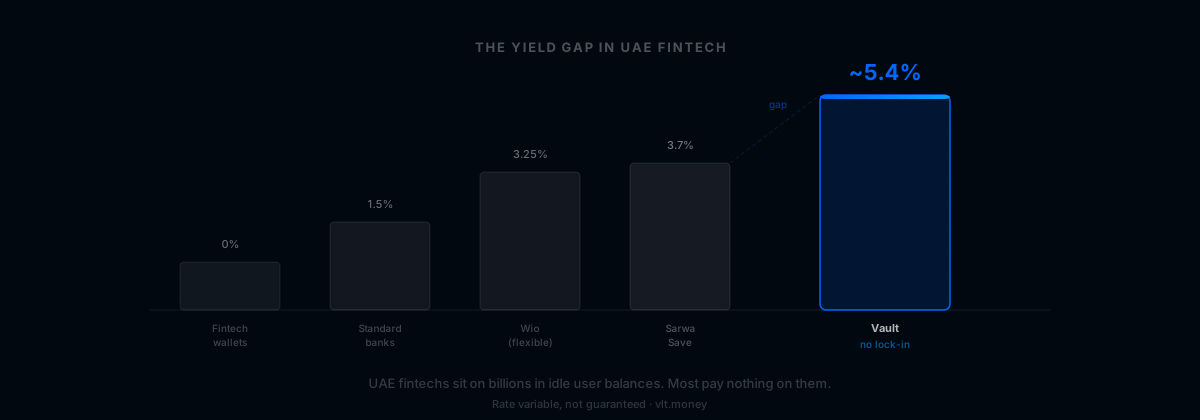
Users deposit money. They use it for transfers, bill payments, maybe some investment features. But between transactions, that money sits in an app earning 0%. The app has hundreds of millions of dirhams in user balances doing nothing.
The banks that power those apps earn on those balances. The app earns transaction fees. The user earns nothing.
That's the earnings gap — and it's one of the bigger untapped opportunities in UAE fintech right now.
Why this matters more in the UAE
The UAE's expat demographic is unusual. High earners, short time horizons, significant liquidity sitting in digital apps waiting for its next use — a rent payment, a remittance, a deposit on a new apartment.
That money is fundamentally different from long-term savings. It can't be locked. It needs to stay accessible. It gets used in unpredictable bursts.
This is precisely why standard savings products don't fit. A fixed deposit requires lock-in. An investment account requires commitment and risk tolerance. Neither works for money that might leave in 30 days.
But "it might leave in 30 days" doesn't mean it should earn nothing in the meantime.
The product problem
The fintech apps serving this demographic face a consistent gap in their product lineup: they can move money efficiently, but they can't make it work harder.
Users get great UX for spending. They get poor UX — or no product at all — for earning. The result: money flows through the app, but it doesn't stay. Users who want their money to earn something go elsewhere.
This is a retention problem dressed as a missing feature.
What an earnings layer looks like
The solution isn't building a full savings product in-house. That requires regulatory approvals, treasury operations, and significant capital. Most UAE fintech apps aren't structured to do that.
An earnings layer works differently. The app connects to an external provider — one that handles the lending market mechanics, the compliance, and the rate exposure. The user sees a simple balance that earns. The app adds value without adding operational complexity.
The provider handles how the money is deployed. The app handles the customer relationship.
This is already how the most successful savings features work in global fintech. Revolut's savings vaults, Robinhood's cash sweep — neither involves the app doing treasury operations. They route idle cash to an earnings provider and present it cleanly to users.
The UAE case
In the UAE, there's no incumbent earnings layer provider. The banks that power fintech infrastructure aren't incentivised to share their lending spread with app users. The asset managers building savings products are building consumer products, not APIs.
That gap is exactly what Vault is built to fill — an earnings API for platforms that want to offer their users meaningful returns on idle balances, without building the infrastructure themselves.
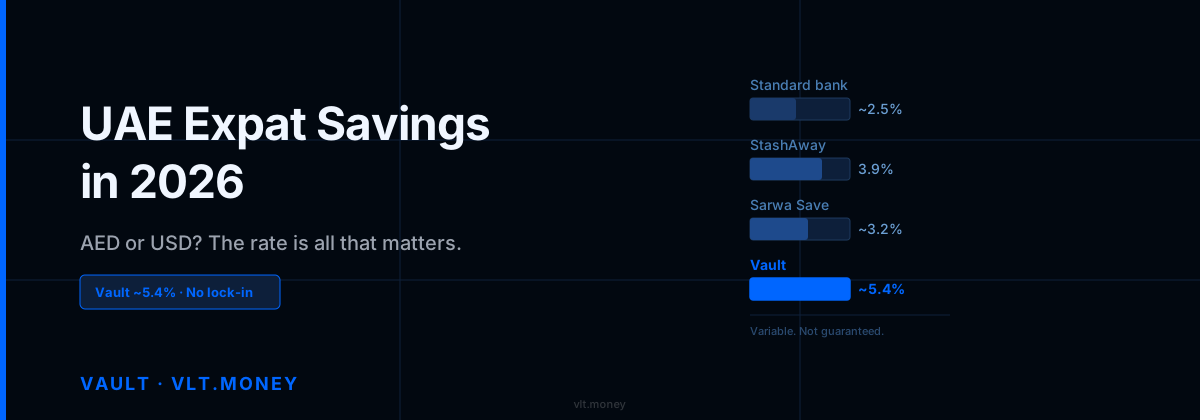
Vault earns from borrower fees in vetted, over-collateralised institutional lending markets. Currently around ~5.4% — variable, not guaranteed, reflecting real market activity. The underlying mechanics are handled by Vault; the app presents earnings simply.
For a payments app with 8.5 million users and significant idle balances, adding that layer has a clear product and retention case.
The window
The UAE fintech market is moving fast. The apps that add meaningful savings features in the next 12 months will retain the users who might otherwise move to neobanks with savings products.
The apps that wait will face a retention problem they didn't have to create.
To discuss the B2B integration model, get in touch at vlt.money
Vault is operated by Prometheus Labs, pursuing FSRA authorisation under ADGM. Earnings are fees from borrowers — not guaranteed returns. Rates vary with market conditions.