Why Your Savings Account Is a Bad Deal
Let's do a quick thought experiment.
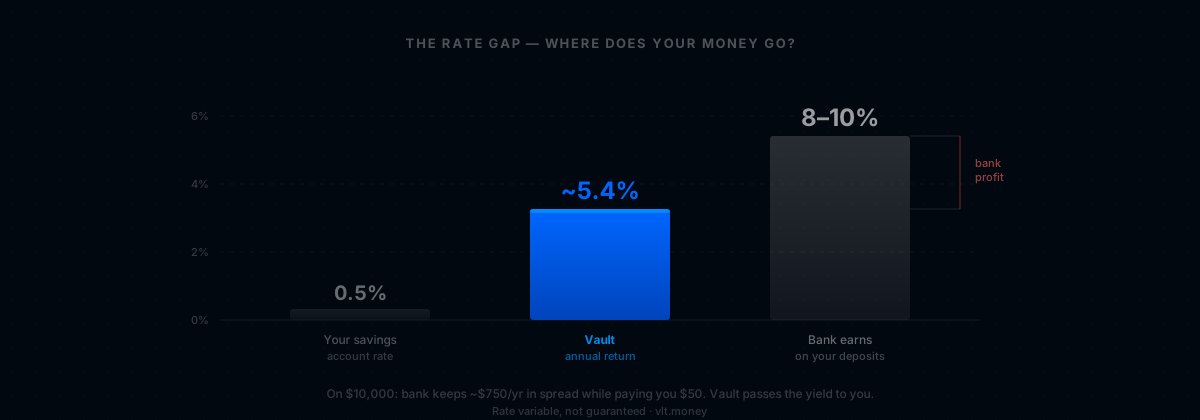
You have $10,000 sitting in a savings account. In the UAE, most flexible savings accounts pay 1–2% — that's $100–200 a year. Less than a weekend away. You're not growing your money; you're barely keeping it alive.
Now here's the part your bank doesn't advertise: they take those same deposits and lend them out at 8%, 10%, sometimes more. The spread between what they pay you and what they earn? That's profit. Bank profit. Not yours.
You're not a customer. You're raw material.
The Numbers Don't Lie
Here's what $10,000 looks like over 5 years at different rates:
| Rate | Annual Earnings | 5-Year Total |
|---|---|---|
| 1–2% (typical flexible savings) | $100–$200 | ~$510–$1,040 |
| ~5.4% (Vault) | $540 | ~$3,007 |
That's not a rounding error. That's $2,000–$2,500 left on the table — every five years, on just $10,000. Scale that up to $50,000 and you're looking at over $10,000 in missed earnings over the same period.
Why Does This Happen?
Banks have had a captive audience for decades. Your paycheck gets deposited, your bills get paid, and the rest just sits there. Moving money to a higher-rate account feels complicated, or risky, or just not worth the hassle.
Banks know this. They've built entire businesses on your inertia.
The incentive structure is simple: as long as you don't move your money, they don't need to compete for it. So they don't.
What's Actually Changed
For most of history, earning more than a savings account rate meant either:
- Locking your money in a certificate of deposit for months or years
- Taking on stock market risk
- Being wealthy enough to access private lending opportunities
None of those were great options for regular people who just wanted their money to work harder without gambling it.
What's changed is that lending markets — the same kind banks use to earn their spread — are now accessible in a different way. Instead of your bank pocketing that spread, platforms like Vault route your money directly to vetted lending markets and pass the fees back to you.
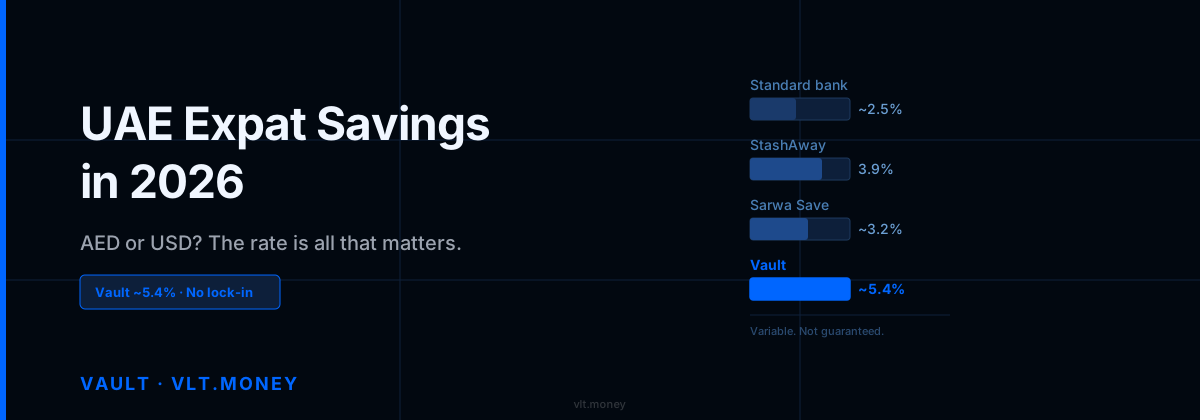
The math shifts. Instead of $50, you're looking at closer to $540 a year on that same $10,000. No stock market exposure. No lock-up period.
The Catch (Because There's Always a Catch)
We won't pretend this is risk-free. Lending always carries some risk — that's why it pays more than a savings account. The key questions are: who's borrowing, how are they screened, and what happens if something goes wrong?
At Vault, we work exclusively with vetted lending markets that have track records and risk controls. We're transparent about how the process works. And unlike a bank, we're not hiding the mechanics from you.
The ~5.4% current rate we show isn't guaranteed — rates move with market conditions. But the structural advantage is real and durable: you're accessing the same type of return that banks have always kept for themselves.
The Honest Ask
If your savings account is paying you 1–2%, ask yourself: why?
Not as a rhetorical question — actually ask it. Your bank has an answer. It's just not one that benefits you.
Vault earnings are fees paid by institutional borrowers — not guaranteed returns. Rates are variable. Vault is in the process of obtaining ADGM regulatory approval.