Filipinos are one of the largest expat communities in the UAE — close to 900,000 people, working across healthcare, construction, hospitality, retail, and professional services. Many are OFWs (Overseas Filipino Workers) sending remittances home regularly while also building personal savings.
The challenge: most competitive UAE savings products are built around one assumption that most OFWs don't fit.
The salary routing problem
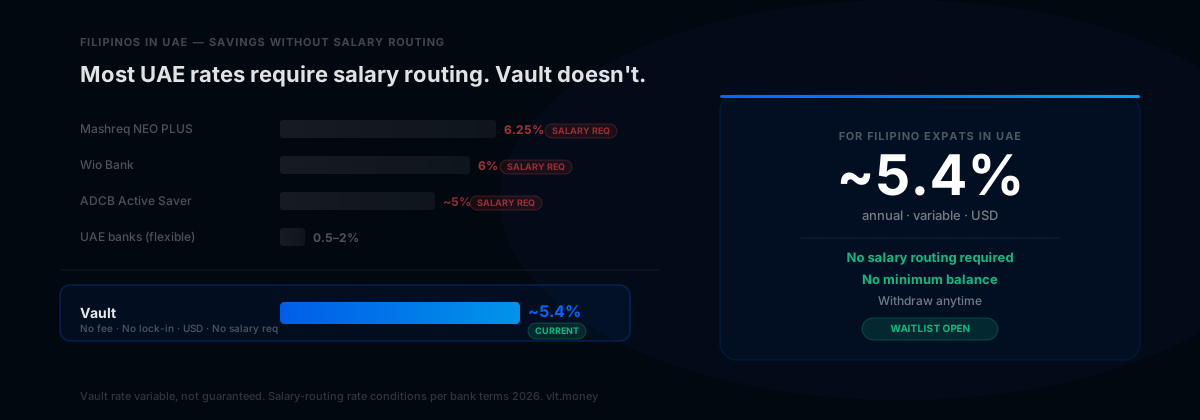
The best-advertised UAE savings rates require you to route your salary through a specific UAE bank each month:
- Mashreq NEO PLUS (6.25%): Requires AED 10,000/month salary transfer (max 2 debit transactions/month or you earn 0%)
- Wio Bank (up to 6%): Requires Salary or Family plan with active salary routing
ADCB's 5% Active Saver campaign ended March 2025. ADCB now has a live Super Saver at up to 4.5% AED — but only on balances of AED 50,000 or more, and only on new external money that also increases your total ADCB relationship balance. Below AED 50,000, you earn 0.01%.
If you're paid by an employer who transfers to a bank you don't control, or if your remittances go through an exchange like LuLu Exchange or Al Ansari, meeting these conditions is typically not possible. You earn the fallback rate — usually 0.5–2%.
What Filipinos in the UAE actually earn at the bank
Without salary routing or meeting balance conditions, typical UAE savings rates are:
| Bank | Flexible rate (no conditions) |
|---|---|
| Emirates NBD | 1.0–1.25% standard; Apr–Jun 2026 promo 2.5–2.75% (new money only; 5% headline requires AED 10M+) |
| FAB iSave | ~2.5% standard; 4% on new funds until Jun 30, 2026 |
| ADCB | 0.5–1% standard; up to 4.5% Super Saver (AED 50K+, new external money only) |
| Standard Chartered | 0.5–1% |
| RAKBank | 1–1.5% |
| Wio flexible | 2.75% USD / 3.25% AED |
FAB iSave pays 4% on new funds until June 30, 2026 — most existing FAB depositors earn ~2.5% standard. Conditions and expiry dates mean the headline rates rarely reflect what most savers actually earn.
Specific financial patterns for Filipino OFWs in UAE
Remittance-first thinking: Many OFWs prioritise sending money home and treat UAE savings as a short-term holding account. But the gap between 1% and 5% on AED 20,000 over 12 months is over AED 800 — money that could fund an extra remittance.
Land Bank, BDO, and Philippine accounts: Many OFWs maintain Philippine bank accounts or use OFW-targeted products like the Landbank OFW account. These are excellent for Philippine peso savings and remittance management, but they're not UAE savings vehicles — and peso accounts carry currency risk for anyone planning to keep spending in UAE.
OWWA and government schemes: The Overseas Workers Welfare Administration has investment and savings programs for OFWs. These are Philippine government programs, accessible online, but not a substitute for earning on your idle UAE savings.
Exchange house remittance: Most Filipinos use LuLu Exchange, Al Ansari Exchange, or Western Union for remittances. These are cost-effective for sending money home but offer no savings function on the balance you hold in UAE.
Options that work without salary routing
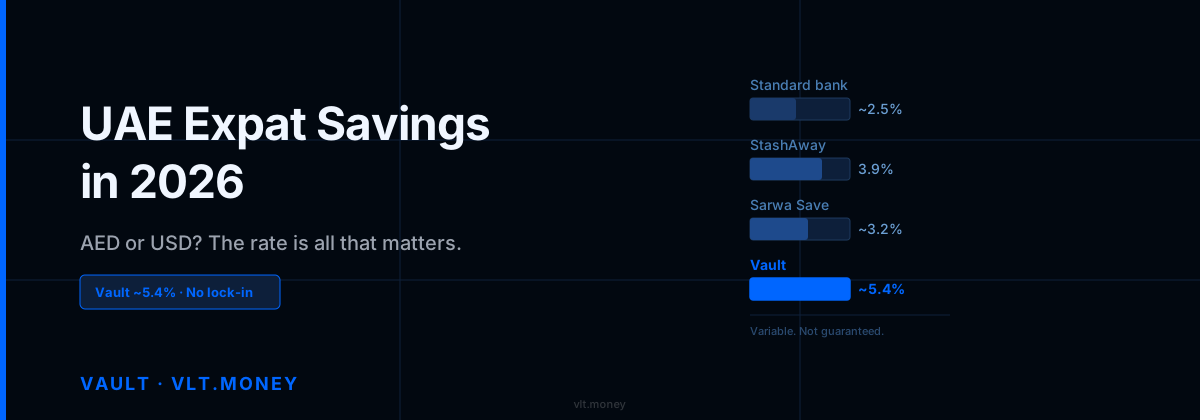
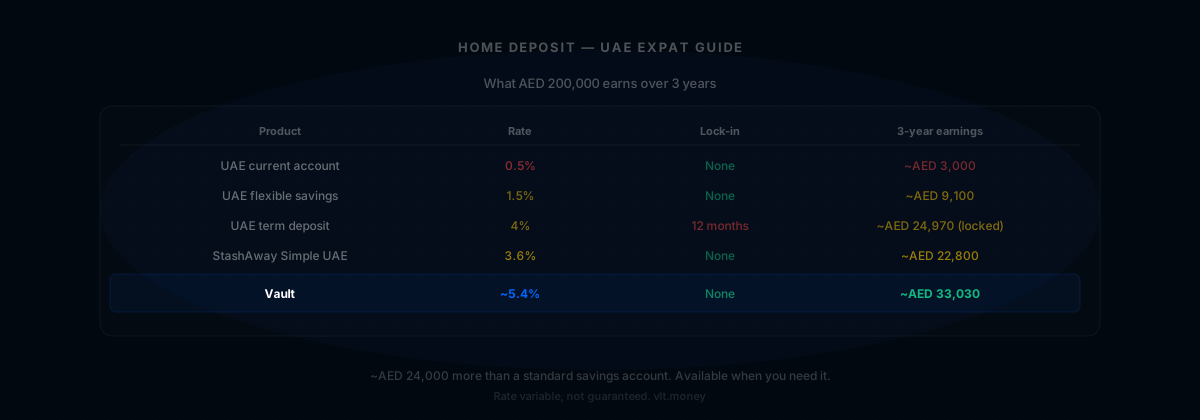
StashAway Simple UAE — 3.6%
UAE-regulated (DFSA-licensed) money market fund. No minimum, no lock-in, accepts AED and USD. Rate tracks the US Federal Reserve — will decline as the Fed cuts rates. No salary requirement.
Good for: OFWs who want regulation and simplicity.
Sarwa Save+ — ~3.2% net
Regulated by ADGM and DFSA. Gross rate is 3.7%; after Sarwa's 0.5% annual management fee, you receive approximately 3.2%. Same Fed-tracking mechanism as StashAway.
Good for: OFWs who already use Sarwa for investments.
Fixed deposits at Wio or SIB — 4–4.25%
Available with 12-month lock-in. A good option if you're confident you won't need the money for a year — common for OFWs building a long-term savings pot.
Vault — ~5.4% (pre-launch, pursuing ADGM approval)
Vault earns from fees paid by institutional borrowers in vetted lending markets, not from a money market fund. No salary conditions, no minimum, no annual fee, no lock-in. USD-denominated.
Because the rate comes from borrowing demand rather than central bank decisions, it doesn't automatically decline when the Fed cuts rates.
Important: Vault is pre-launch and not yet ADGM-licensed. It carries more risk than StashAway or Sarwa. Appropriate for OFWs comfortable with early-stage fintech products who understand the risk involved.
→ Join the waitlist at vlt.money
Comparison table
| Option | Rate | Fee | Lock-in | Regulated |
|---|---|---|---|---|
| Vault | ~5.4% | None | None | Pursuing ADGM |
| StashAway Simple | 3.6% | None | None | DFSA ✓ |
| Sarwa Save+ | ~3.2% net | 0.5%/yr | None | ADGM + DFSA ✓ |
| Wio / SIB FD | 4–4.25% | None | 12 months | CBUAE ✓ |
| FAB flexible | ~2.5% | None | None | CBUAE ✓ |
| Major UAE banks | 0.5–2% | None | None | CBUAE ✓ |
The OFW idle money problem
A typical OFW accumulates savings between remittance cycles — often AED 5,000–30,000 sitting in a current account for 2–6 weeks at a time. At a typical UAE bank rate of 1%, AED 20,000 earns about AED 17 per month. At 5.4%, it earns about AED 90.
Over a year, across multiple remittance cycles, that difference is meaningful — especially for families where every dirham is accounted for.
Related reads
- Why UAE Expats Are Leaving Money on the Table — the savings gap explained
- Best Savings Account for Indians in the UAE — guide for the largest UAE expat community
- Best Savings Account for Pakistani Expats in the UAE — similar guide for Pakistani expats
- Best Savings Accounts UAE 2026 — full UAE comparison across all options
- UAE Savings Account Fees vs Net Rate — understanding the fee drag
Rate data current as of March 2026. All rates are variable and subject to change. Vault is pre-launch and not yet ADGM-licensed. This is not financial advice.